Philanthropy
[ARCHIVE_INDEX] · loading entries . . .
Bill Gates Accomplishments
Loading accomplishments…
[ARCHIVE_INDEX] · loading entries . . .
Loading accomplishments…
[SUBFILE] · /events/philanthropy/ · access granted
Bill Gates has donated more than $59.5 billion through the Bill & Melinda Gates Foundation — the largest private charitable foundation in history. These 173 verified philanthropy milestones track every major gift, pledge, and program: from co-creating the Giving Pledge in 2010 to committing 99% of his remaining wealth before the foundation closes in 2045.
[ARCHIVE_FUNDING] · INDEPENDENT · NO ADS
One developer. >300 verified entries. Zero ads. Forever free.
No sponsors, no paywall, no algorithm. If this archive has been useful to you, reader support is what keeps it running.
June 2026
Melinda French Gates announced in June 2026 that she would donate an additional $215 million through her organization Pivotal to focus on women's reproductive and midlife health, bringing her total support for women's health to about $600 million over two years. The commitment underscored French Gates's independent philanthropic path since stepping down from the Gates Foundation in 2024 and her focus on areas she has said are chronically underfunded. It came amid broader cuts to U.S. reproductive- and global-health funding.
January 2026
Bill Gates published the 2026 Gates Foundation Annual Letter, titled 'Reaching 2045,' framing the next two decades as the Foundation spends down its endowment before closing in 2045. Gates wrote that his optimism now 'comes with footnotes,' questioning whether global generosity will keep pace with rising wealth and whether innovation will be scaled to reduce inequality. He pledged to spend much of 2026 advocating for child-health funding and set a goal of again halving child mortality in the global South by 2045, while voicing both excitement about AI for health and concern about managing its disruption.
May 2026
In May 2026 the Gates Foundation committed an initial $15 million in emergency funding to support the response to an Ebola outbreak in Africa — $5 million to the Africa CDC for regional coordination, $5 million to the WHO Regional Office for Africa for frontline operations, and $5 million to WHO headquarters for rapid procurement, diagnostics, and surge logistics. The funding reflected the Foundation's continuing role as a rapid-response financier during infectious-disease emergencies, even as it scales toward its planned 2045 closure.
January 2026
In January 2026 the Gates Foundation approved a record annual payout of about $9 billion for the year while announcing it would reduce its workforce by up to roughly 500 positions — about 20% of its staff — by 2030, shifting money from operations into grants as it accelerates spending ahead of its planned 2045 closure. CEO Mark Suzman said the reductions would be gradual and reviewed annually rather than imposed in a single wave, and the board capped operating costs at no more than $1.25 billion, around 14% of the budget. The moves reflected the tension between scaling up philanthropic ambition and controlling overhead during the wind-down. The restructuring was among the most significant in the Foundation's history.
2026
Fact-checkers in 2026 pushed back on viral posts claiming 'Bill Gates' was personally releasing 30 million 'bacteria-infected mosquitoes' a week in Colombia, clarifying that the work is run by the World Mosquito Program — a not-for-profit owned by Australia's Monash University — not by Gates himself. The program breeds Aedes aegypti mosquitoes carrying the naturally occurring Wolbachia bacterium, which reduces the insects' ability to transmit dengue, Zika and yellow fever; city-wide deployments in the Medellín area between 2017 and 2024 protected millions of people and cut dengue incidence by roughly half. The Gates Foundation is a major funder of the method, having directed an estimated $185 million toward Wolbachia mosquito research since 2010. The accurate picture is a long-running public-health intervention, not the population-control scheme implied by the viral framing.
February 2026
In February 2026 the Gates Foundation publicly dismissed viral allegations that it had released genetically modified or laboratory-bred mosquitoes in Kenya, stating that it does not conduct any mosquito-release activities in the country. The claims spread on social media amid wider suspicion of Gates-funded malaria research using gene-drive and sterile-male techniques elsewhere in Africa. The Foundation clarified that its role is limited to funding scientific research into genetics-based approaches for controlling malaria-carrying mosquitoes, not deploying them in Kenya. Kenyan outlets reported the denial as misinformation about the Foundation's activities continued to circulate.
April 2026
In April 2026, the Gates Foundation announced an independent external governance review led by former UN Secretary-General Ban Ki-moon and two former US federal judges, tasked with examining Foundation oversight structures, donor transparency, and executive conduct policies. The Foundation simultaneously announced a 20% reduction in its global workforce — approximately 500 positions — citing the need to streamline operations. Foundation CEO Mark Suzman described the reductions as part of a 'strategic reset' unrelated to the Epstein scrutiny; critics and former staff disputed that characterization.
March 2026
In March 2026, the US House Committee on Oversight and Accountability issued a subpoena to the Gates Foundation demanding internal communications, grant records, and financial documents related to Jeffrey Epstein spanning 2010–2019. The committee gave the Foundation a 30-day compliance deadline. A Gates Foundation spokesperson said the organization was 'reviewing the request and committed to cooperating fully with legitimate oversight.' The subpoena focused specifically on whether Foundation grant decisions were influenced by Epstein and whether donor privacy obligations had been used to shield Epstein's involvement.
March 2026
A March 2026 Fortune investigation reported that Melanie Walker — a Gates Foundation neuroscience programme officer and personal physician to Gates — and Steven Sinofsky, a former Microsoft executive and close Gates associate, had maintained contact with Jeffrey Epstein beyond the period Gates claimed the relationship had ended. Walker, who had met Epstein as a student in 1992 and remained close to him, attended Epstein events through at least 2017; Sinofsky had exchanged emails with Epstein as late as 2018. The story added to scrutiny of the breadth of Gates's social circle's ties to Epstein.
April 2026
The Gates Foundation announced it had commissioned an independent investigation into its financial and operational ties to Jeffrey Epstein — including the IPI donations and any other Epstein-associated giving — just weeks before Gates was scheduled to testify before Congress. The probe was ordered by the Foundation's board. Gates stated publicly that every minute I spent with him I regret and acknowledged meeting Epstein was a serious error in judgment. The investigation reflected the Foundation's recognition that ongoing press investigations into the Epstein relationship posed a significant long-term reputational risk to its global health mission.
May 2025
Around its 2025 engagement in the region, the Gates Foundation announced it would open an office in Singapore and front roughly $100 million for Southeast Asian regional health initiatives, launching a 'Health for Human Potential' program focused first on Indonesia, the Philippines, and Vietnam — the region's most populous countries — with an emphasis on maternal and child health. The foundation also signed a memorandum of understanding with Indonesia's Tanoto Foundation to collaborate on nutrition, education, and building Asia's philanthropic ecosystem. The moves marked a notable expansion of the foundation's footprint in Asia.
2025
In 2025 the Gates Foundation began exploring how to bring GLP-1 weight-loss and diabetes drugs — such as Novo Nordisk's Wegovy and Eli Lilly's Mounjaro — to people in lower-income countries, in talks with the Pan American Health Organization. Bill Gates noted that roughly a billion people worldwide are now obese, about 70% of them in low- and middle-income countries, and that 'behavior change is hard,' pointing to the drugs as a potential tool against obesity-linked chronic disease. The push anticipated cheaper generic versions of semaglutide as patents expire, and reflected the foundation's expansion beyond infectious disease into the rising burden of noncommunicable conditions.
March 2025
In March 2025 Breakthrough Energy — the climate organization Bill Gates founded in 2015 — laid off dozens of employees and shut down its U.S. and European public-policy and advocacy teams, retreating from the lobbying work that had helped pass the 2022 Inflation Reduction Act. The cuts, affecting more than three dozen staff including senior leaders, came as the Trump administration moved to boost fossil fuels and Republicans weighed rolling back clean-energy tax credits. Breakthrough Energy said it would refocus on its investment arms — Breakthrough Energy Ventures, Catalyst, and Fellows — signaling a shift from climate-policy advocacy toward funding technology directly.
2025
The Giving Pledge — the campaign Bill Gates and Warren Buffett launched in 2010 to get the ultra-wealthy to commit more than half their fortunes to philanthropy — marked its 15th anniversary in 2025 with more than 250 signatories from about 30 countries. The milestone drew scrutiny: an Institute for Policy Studies analysis found the pledge largely unfulfilled in practice, with many signers far wealthier than when they joined and much of their giving routed into private foundations and donor-advised funds rather than working charities. Supporters credited it with normalizing large-scale giving; critics questioned its real-world impact.
January 2025
After the United States announced in January 2025 that it would withdraw from the World Health Organization — a process that took effect in early 2026 — the Gates Foundation's relative weight as a WHO funder grew; it was already among the organization's largest voluntary contributors, providing on the order of 13% of voluntary contributions. Foundation CEO Mark Suzman issued a statement on the U.S. withdrawal warning of the risks to global health, while Gates reiterated that philanthropy cannot replace government funding. The episode underscored both the foundation's outsized role in global health and the fragility of relying on it to fill gaps left by governments.
June 2025
In June 2025, speaking in Addis Ababa, Bill Gates announced that the majority of the roughly $200 billion the Gates Foundation expects to spend before closing in 2045 would go to Africa, calling on the continent's young innovators to help drive progress in health and development. The pledge came amid steep cuts to U.S. and other donor aid that Gates warned were reversing decades of gains. He framed the commitment as a bet that investments in health and human capital — maternal and child health, disease control, and agriculture — would unlock Africa's potential over the next two decades.
June 2025
In June 2025 Bill Gates traveled to Ethiopia and Nigeria to mark the 25th anniversary of the Gates Foundation's work in Africa, where it has committed to directing the majority of its giving over the next two decades. In Addis Ababa he met Prime Minister Abiy Ahmed and joined roundtables on nutrition and Ethiopia's salt-fortification program; in Nigeria he met President Bola Tinubu and local innovators to discuss primary-healthcare reform and AI-driven health tools, and took part in a Goalkeepers Nigeria event. Gates used the trip to assess health priorities in the wake of global aid cuts and to reaffirm the foundation's long-term commitment to the continent.
June 2025
In June 2025 Warren Buffett donated about $6 billion in Berkshire Hathaway stock to five foundations — his largest annual gift to date — including a major tranche to the Gates Foundation, to which he has given more than $47 billion over the years. Buffett, who co-founded the Giving Pledge with Bill Gates in 2010, has reiterated that the Gates Foundation will receive 'no money' from his estate after his death; his remaining fortune will instead go to a charitable trust overseen by his three children. The gifts highlighted both Buffett's extraordinary support for Gates's philanthropy and its coming end.
January 2025
In January 2025 Bill Gates warned that the world remains underprepared for the next pandemic, estimating roughly a 10-15% chance of a major naturally caused pandemic within the following four years. Gates, who wrote the 2022 book 'How to Prevent the Next Pandemic' and proposed a global 'GERM' response team, argued that the world had not done enough since COVID-19 to build the surveillance, vaccine-manufacturing, and response capacity needed. He has pushed for distributed mRNA vaccine-production capacity in developing regions to hit a '100-day' goal for making vaccines in a future outbreak.
October 2025
In October 2025 Bill Gates announced a $50 million personal investment in the Dementia Discovery Fund to advance research toward a cure for Alzheimer's disease, citing the personal toll of watching his father live with the condition. Gates highlighted priorities including better and earlier diagnosis, expanding clinical-trial participation, and using big data and new theories to speed progress. The commitment added to his earlier funding of dementia research and a broader pivot toward brain health.
October 2025
Ahead of the COP30 climate summit in Belem, Brazil, Bill Gates urged the world to 'refocus' climate efforts away from temperature targets and toward protecting human welfare — funding health, agriculture, and energy access for the poorest — arguing that climate change, while serious, is 'not civilization-ending.' Gates, who founded Breakthrough Energy and has funded more than 150 decarbonization companies, notably did not attend COP30, a departure from his past participation. His message drew both praise and criticism from climate scientists and advocates.
September 2025
On September 24, 2025, Chinese Premier Li Qiang met Bill Gates on the sidelines of the U.N. General Assembly, praising the Gates Foundation's long-term work on poverty reduction and global health and urging it to help deepen China-U.S. exchanges and cooperation. Gates has cultivated a decades-long relationship with China, where the Foundation supports health, agricultural, and poverty-reduction programs and runs a Beijing office. The meeting underscored Gates's role as an informal bridge between the two powers amid strained relations.
September 2025
Bill Gates said in September 2025 that he and Health Secretary Robert F. Kennedy Jr. had 'agreed to disagree' on vaccines, while signaling he hoped to find pragmatic common ground with the administration on global health. Gates, a longtime champion of childhood immunization, expressed concern that vaccine skepticism was spreading to low-income countries where measles deaths are far higher than in the United States. The comments came amid a U.S. measles resurgence and Kennedy's rollback of federal vaccine guidance.
March 2025
In March 2025 Bill Gates reportedly warned the Trump administration that the Gates Foundation could not fill the gap left by the dismantling of the U.S. Agency for International Development, stressing that private philanthropy is no substitute for U.S. government funding of global health. The warning came as the administration moved to shut down USAID and cut foreign aid, threatening programs for vaccines, HIV, and maternal and child health. Gates argued the cuts would cost lives among the world's poorest.
June 2025
After U.S. Health Secretary Robert F. Kennedy Jr. moved in June 2025 to halt U.S. funding for Gavi, the global vaccine alliance, Bill Gates warned the cuts would have 'devastating consequences' and called on Congress to keep funding the organization. Gates cautioned that without Gavi 'more sick kids will fall behind' and hospital wards would overflow, as experts predicted fewer vaccine rollouts and scaled-back measles and rubella campaigns in poor countries. The halted U.S. commitment was roughly $1.6 billion for 2026-2030 — about equal to the Gates Foundation's own Gavi pledge.
September 2025
In September 2025 the Gates Foundation announced a partnership with Indian manufacturer Hetero to produce a generic version of lenacapavir — a twice-yearly injectable that prevents HIV — at roughly $40 per patient per year, a fraction of the branded price. The Foundation made more than $80 million in catalytic investments to accelerate generic manufacturing and delivery of the breakthrough PrEP tool, which offers six months of protection per injection. The effort aimed to make lenacapavir affordable for national health systems in low- and middle-income countries.
September 2025
At the 2025 Goalkeepers event, Bill Gates pledged $912 million to the Global Fund to Fight AIDS, Tuberculosis and Malaria's 2026-2028 replenishment, which aims to save an estimated 23 million lives between 2027 and 2029. The pledge came as U.S. and other donor funding for global health declined sharply, and Gates urged world leaders to sustain financing for the three diseases. The commitment built on decades of Gates Foundation support for the Global Fund.
September 2025
The Gates Foundation's 2025 Goalkeepers Report warned that the number of children dying before their fifth birthday could rise for the first time this century — to an estimated 4.8 million in 2025 — as wealthy nations cut foreign aid. The report projected that up to 16 million additional children could die by 2045 if global-health funding stays below 2024 levels, noting that development assistance for health had fallen to a 15-year low. Gates argued that targeted investment in primary health care, vaccines, and next-generation innovations could still save millions of lives.
May 2025
Later in May 2025 Elon Musk publicly rejected Bill Gates's accusation that cuts to the U.S. Agency for International Development would cause the deaths of the world's poorest children, dismissing the claim as unsubstantiated. Musk argued that USAID programs found to be genuinely useful had been transferred to the State Department rather than deleted, and contended that organizations had often failed to provide evidence the spending actually saved lives. The exchange marked a sharp, personal clash between two of the world's wealthiest men over the consequences of dismantling American foreign aid. Independent analysts warned that the abrupt funding withdrawal posed real risks to global health programs regardless of the dispute.
June 2025
At the 2025 Rotary International Convention, Bill Gates and the Gates Foundation joined Rotary in committing up to $450 million over three years to finish the global eradication of polio, a disease now endemic in only two countries — Afghanistan and Pakistan. Gates said the world is '99.9%' of the way to eradication but that the last stretch demands the same determination that brought it this far. The funding supports vaccination campaigns, the next-generation nOPV2 oral vaccine — of which more than 1.6 billion doses had been administered by mid-2025 — and emergency operations and cross-border coordination in the remaining endemic areas. Polio eradication has been one of the Gates Foundation's longest-running priorities.
October 2025
In October 2025 Bill Gates published a memo titled 'Three Tough Truths About Climate,' arguing that while climate change is a serious problem it 'will not lead to humanity's demise,' that temperature is not the best measure of progress, and that 'health and prosperity are the best defense against climate change' — warning against cutting health and development funding to pay for climate efforts. The memo drew sharply mixed reactions: some scientists said it made fair points about adaptation and human welfare, while critics accused Gates of downplaying the crisis and treating it as a purely technological problem. President Donald Trump claimed vindication on social media, writing that Gates had 'finally admitted' he was 'WRONG' about climate. Released as Gates turned 70, the piece was widely read as a recalibration of his long-standing climate advocacy.
May 2025
In May 2025 Bill Gates publicly accused Elon Musk of 'killing the world's poorest children' through the abrupt dismantling of the U.S. Agency for International Development under the Department of Government Efficiency (DOGE). Gates told the Financial Times that 'the picture of the world's richest man killing the world's poorest children is not a pretty one,' and warned the funding collapse had already left lifesaving food and medicine expiring in warehouses. He cautioned that the cuts — affecting roughly 80% of USAID programs — could trigger resurgences of polio, measles and HIV and lead to 'millions more deaths' over the following years. The remarks came as Gates announced plans to accelerate his own foundation's giving.
May 2025
In May 2025 Bill Gates announced he would give away virtually all of his wealth — about 99%, an estimated $200 billion in foundation spending over the period — and that the Gates Foundation would permanently close on December 31, 2045, two decades earlier than its previous open-ended timeline. Gates said the accelerated schedule was a response to urgent global problems that 'can't wait,' and framed the decision personally, saying he does not want people to say, 'He died rich.' The plan roughly doubles the Foundation's annual giving, toward around $9 billion a year. Since 2000 the Foundation has already directed more than $100 billion toward global health, poverty, and development.
November 2025
Djibouti and the British biotech firm Oxitec — whose genetic mosquito technology is funded by the Bill & Melinda Gates Foundation — marked the opening of a mosquito-production facility on November 5, 2025, scaling up releases of 'Friendly' Anopheles stephensi mosquitoes against a surge in urban malaria. The engineered male mosquitoes do not bite or transmit disease and carry a gene that prevents female offspring from surviving, gradually suppressing the invasive, malaria-spreading Anopheles stephensi population first detected in Djibouti in 2012. The program — a partnership between Djibouti's National Malaria Control Program, the nonprofit Association Mutualis, and Oxitec — had conducted East Africa's first GM-mosquito release in May 2024. National malaria cases had risen from hundreds to tens of thousands a year as the invasive mosquito spread.
August 2025
In August 2025 the government of Burkina Faso ordered an immediate halt to all activities of Target Malaria — a research consortium funded primarily by the Bill & Melinda Gates Foundation and led by Imperial College London — after the project released roughly 16,000 genetically modified male mosquitoes in the village of Souroukoudingan on August 11. National authorities suspended the work on August 18, sealed the facilities housing the GM mosquitoes, and ordered remaining samples destroyed, while the released insects were eliminated using insecticides. On August 22 the Ministry of Higher Education, Research and Innovation announced the project had terminated all activities in the country, citing biosafety concerns, environmental risk, and a desire to keep control of the research national. Burkina Faso had been one of Africa's most prominent testing grounds for gene-drive mosquito technology since the program launched in 2012.
November 2025
The Gates Foundation pledged $1.4 billion by 2029 at COP30 in Belém, Brazil to expand access to climate-resilient crop varieties, precision fertiliser guidance, and digital advisory tools for smallholder farmers in sub-Saharan Africa and South Asia. The commitment targets the estimated 600 million smallholders whose yields are increasingly threatened by drought, flooding, and erratic rainfall driven by climate change, with specific programmes in Kenya, Ethiopia, Bangladesh, and India.
2025
By 2025, the Bill & Melinda Gates Foundation and UNHCR had completed approximately ten grants totalling nearly $20 million — making the Foundation one of the most consistent private philanthropic partners in refugee relief globally. Spanning nearly two decades and covering emergency health relief in South Sudan, maternal and newborn care programs in six countries, sanitation innovation in East Africa and Bangladesh, digital financial inclusion for Syrian refugees, and the Ukrainian emergency response, the partnership represented a sustained commitment to applying development science and private capital to the world's most acute displacement crises. The Foundation's most recent $10 million emergency grant, awarded in 2025, covered health, education, water, and sanitation for refugees across the UNHCR programme.
November 2025
The Gates Foundation announced a $1.4 billion, four-year investment to expand access to climate-resilient agricultural innovations for smallholder farmers across sub-Saharan Africa and South Asia — the communities least responsible for climate change but most exposed to its consequences. The commitment funded drought-tolerant and heat-resistant crop varieties, digital advisory services, climate-smart soil management, and agricultural insurance systems that protect farmers when harvests fail due to extreme weather. Gates framed the investment as an urgency response to projections that climate change would push an additional 100 million people into poverty by 2030.
June 2024
On May 13, 2024, Melinda French Gates announced she would resign as co-chair of the foundation she had helped lead since 2000, effective June 7, 2024. Under an agreement with Bill Gates, she received $12.5 billion to direct toward her own philanthropy — chiefly women's and families' health and rights through her organization, Pivotal Ventures — saying she had 'a different vision' for the next chapter of her giving. Her departure followed the couple's 2021 divorce and the organization's renaming earlier in 2024 from the 'Bill & Melinda Gates Foundation' to simply the 'Gates Foundation,' leaving Bill Gates as sole chair of the world's largest private charitable foundation.
September 2024
In September 2024, Bill Gates publicly called on wealthy nations to significantly increase foreign development assistance to Africa and to extend meaningful debt relief to African governments whose fiscal space had been severely constrained by interest payments. Gates framed the argument in terms of both moral obligation and geopolitical stability: with African governments unable to invest in health systems, education, or infrastructure because of debt servicing costs, the development gains of the previous two decades were at risk of being reversed — and with them, the demographic conditions that determine whether young Africans can build stable futures on the continent or feel compelled to leave.
2023
In November 2023, investigative journalist Tim Schwab published 'The Bill Gates Problem: Reckoning with the Myth of the Good Billionaire,' an extended critique drawn from his award-winning reporting for The Nation, the Columbia Journalism Review and the BMJ. The book argues that Gates uses philanthropy to exercise vast, unaccountable political power — shaping public policy, scientific research, markets and the news media — and portrays him as fundamentally the same monopolist he was at Microsoft. It compiles criticisms that Gates-funded programs in education, agriculture and global health have often been undemocratic and ineffective, and that the foundation's funding of researchers and journalists creates conflicts of interest. The Gates Foundation has defended its work and transparency. The book became the most prominent book-length scrutiny of Gates's philanthropy.
2022
In 2022, the Alliance for a Green Revolution in Africa — a flagship Gates Foundation agricultural initiative — quietly dropped 'Green Revolution' from its name, rebranding simply as AGRA under the tagline 'Sustainably Growing Africa's Food Systems.' Critics, including African food-sovereignty groups, called the change a tacit admission of failure, pointing to independent evaluations finding that after some 15 years and hundreds of millions of dollars, AGRA had not delivered the promised gains in yields or farmer incomes, while hunger rose across its target countries. AGRA framed the rebrand as reflecting a broader strategy rather than a retreat. The move intensified scrutiny of the Gates Foundation's industrial-agriculture model in Africa.
July 2022
On July 13, 2022, Bill Gates announced he was transferring $20 billion of his personal wealth to the Gates Foundation, enabling it to raise annual payouts from about $6 billion toward $9 billion, and reiterated that he would give away 'virtually all' of his fortune. 'I will move down and eventually off of the list of the world's richest people,' he wrote. Then worth more than $100 billion, Gates cited the COVID-19 pandemic, Russia's invasion of Ukraine, and reversals in global health and development as reasons to accelerate his giving. The pledge was a step toward the larger commitment he would later make to give away essentially all of his wealth and wind down the foundation by 2045.
March 2022
Following Russia's full-scale invasion of Ukraine in February 2022 — which triggered the largest refugee crisis in Europe since World War II — the Bill & Melinda Gates Foundation pledged $1,000,003 to UNHCR to support refugees fleeing to bordering countries including Poland, Moldova, Romania, Slovakia, and Hungary. Over 4 million Ukrainians had crossed international borders within the first month. The grant, announced in March 2022, was distributed over approximately one year and supported UNHCR's emergency registration, shelter, and protection systems in the receiving countries.
2021
Beginning in 2021, the Alliance for Food Sovereignty in Africa (AFSA) and a coalition of some 200 organizations publicly called on the Gates Foundation and other donors to stop funding the Alliance for a Green Revolution in Africa, arguing it pushed expensive commercial seeds and synthetic fertilizer that trapped smallholder farmers in debt while failing to cut hunger. The campaigners pointed to an independent evaluation that, they said, confirmed AGRA had fallen short of its goals, and urged a shift toward agroecology. The Gates Foundation defended AGRA's work and continued its support. The campaign marked an unusually direct revolt by African civil society against one of Gates's signature development programs.
November 2021
Bill Gates and Jeff Bezos jointly hosted a private workshop at the COP26 climate summit in Glasgow bringing together food-company CEOs, agricultural ministers, and NGO leaders to align on eliminating deforestation from global commodity supply chains by 2030. The session produced a joint declaration from 12 multinational food companies committing to deforestation-free sourcing standards; the Gates Foundation subsequently provided philanthropic funding to the Forest, Agriculture and Commodity Trade (FACT) Dialogue, the multilateral forum convened by the UK government to operationalise these commitments.
June 2021
The Gates Foundation awarded $16 million to the World Resources Institute to produce integrated research on transforming food systems to feed 10 billion people by 2050 without clearing additional forest. WRI's 'Creating a Sustainable Food Future' report, co-funded by the grant, mapped five interconnected strategies — reducing demand growth, increasing crop productivity, shifting diets, reducing food loss, and protecting natural ecosystems — and was adopted as the analytical backbone for multiple national food-climate plans submitted under the Paris Agreement.
November 2021
At COP26 in Glasgow, the Gates Foundation pledged $315 million to the CGIAR global agricultural research system to develop stress-tolerant crop varieties, climate forecasting services, and early warning systems for crop diseases. CGIAR maintains the world's largest collection of crop genetic diversity — a vault of 770,000 seed varieties that form the raw material for breeding crops resilient to drought, heat, flooding, and new pathogen strains. Gates funding supports accelerated breeding programmes using genomics and AI, with specific targets including drought-tolerant wheat varieties for South Asia and heat-resistant beans for East Africa.
2020
Mark Suzman — a South African-born former journalist and United Nations official who joined the Gates Foundation in 2007 — became its chief executive in 2020, the day-to-day leader of the world's largest private foundation. Suzman has sharpened its focus on child survival, infectious disease, and poverty, and now faces the singular task of overseeing the foundation's planned $200 billion spend-down and permanent closure in 2045. He reports to Bill Gates, who remains chair and sole named principal after Melinda French Gates's 2024 departure.
July 2020
In July 2020, a coalition of African and German civil-society and faith groups published 'False Promises,' an evaluation of the Alliance for a Green Revolution in Africa (AGRA) — an initiative co-founded by the Gates Foundation that had received more than $1 billion, mostly from Gates. AGRA had pledged to double yields and incomes for 30 million smallholder households and halve hunger by 2020. The report found that staple-crop yield gains were no faster than before AGRA, incomes had not doubled, and the number of undernourished people across AGRA's 13 focus countries had risen roughly 30%; it also noted AGRA had quietly deleted the 'double yields and incomes' goal from its website in 2020. AGRA disputed the methodology and defended its work, but the findings sharpened long-running criticism that Gates's seed-and-input model sidelines agroecology and favors agribusiness.
August 2020
In August 2020, the Columbia Journalism Review published an investigation by Tim Schwab finding that the Gates Foundation had directed more than $250 million in grants to media organizations and journalism projects. Recipients included the BBC, NBC, Al Jazeera, ProPublica, The Guardian, The Atlantic, the Financial Times, and Gannett, among many others, alongside media-training programs and outlets covering global health and development. The piece raised concerns that such widespread funding could blunt critical scrutiny of the foundation and shape coverage of Gates's priorities, and noted the grants often went undisclosed in related reporting. The foundation said its media grants aim to expand quality coverage of underreported issues, not to influence editorial decisions.
2020
The Bill & Melinda Gates Foundation committed approximately $600,000 in emergency COVID-19 response grants to BRAC and BRAC USA in 2020. BRAC — one of the primary humanitarian responders in the Cox's Bazar district of Bangladesh — was at this point serving approximately one million Rohingya refugees alongside local Bangladeshi communities. The grants supported COVID health communication, community health worker deployment, and maintenance of essential maternal and child health services in the camps during the pandemic disruption. They complemented BRAC's pre-existing Gates-funded WASH infrastructure and reinforced its capacity as a long-term refugee service provider.
May 2020
The Bill & Melinda Gates Foundation awarded an additional grant to Grantmakers Concerned with Immigrants and Refugees in May 2020, during the acute phase of the COVID-19 pandemic — a period when immigrant and refugee communities in the United States faced disproportionate health risk, economic loss, and barriers to relief programs. The grant supported GCIR's capacity to mobilise US philanthropic networks toward emergency responses for immigrant-dense communities excluded from federal stimulus programs, as well as longer-term integration and legal support infrastructure.
2020
From 2003 to 2020, the Gates Foundation distributed approximately 1,130 grants for food and agriculture totaling nearly $6 billion, of which almost $5 billion was specifically directed to sub-Saharan Africa — the largest sustained private agricultural investment commitment in history. Programs spanned crop improvement, soil health, market access, digital extension services, water management, post-harvest loss reduction, and smallholder financial inclusion. The Foundation's 17-year agricultural portfolio made it the single most influential private actor shaping the direction of African agricultural research and policy.
August 12, 2020
The Gates Foundation created Gates Ag One as a standalone nonprofit focused on developing climate-resilient crops and improved agricultural practices for smallholder farmers in Sub-Saharan Africa and South Asia. The organization prioritizes drought-tolerant maize, nitrogen-efficient crop varieties, and digital advisory services, aiming to double smallholder productivity by 2030 as climate change intensifies.
September 2019
In September 2019, Ronan Farrow's New Yorker investigation revealed that MIT had received approximately $7.6 million connected to Jeffrey Epstein — concealed in internal records as anonymous gifts — and that senior MIT leadership including president L. Rafael Reif had been informed of Epstein's identity. The story also named Bill Gates as one of several wealthy donors Epstein claimed to be cultivating on MIT's behalf. Following publication, the Gates Foundation conducted an internal review of all Epstein-adjacent relationships and instructed staff to have no further contact with Epstein or his associates.
February 2019
In a Washington Post feature titled 'Africa Hangs in the Balance,' Bill Gates argued that sub-Saharan Africa's rapid population growth — projected to double to 2.5 billion by 2050 — without equivalent investment in health and education would produce both a humanitarian catastrophe and unprecedented migratory pressure on the rest of the world. He described Africa as being at a demographic crossroads: with the right investments in child survival, girls' education, and agricultural productivity, the continent could follow Asia's development trajectory; without them, the numbers of young people without prospects — and without the ability to create stable lives at home — would drive displacement on a scale the international system was not equipped to manage.
December 2019
The Bill & Melinda Gates Foundation renewed its grant to Grantmakers Concerned with Immigrants and Refugees (GCIR) to continue coordinating philanthropic investment in immigrant and refugee support programs across the United States. The grant came in the context of significantly elevated enforcement and policy pressure on immigrant communities under the Trump administration, and funded GCIR's capacity to mobilise private philanthropic capital — matching dollars and shared strategy — toward immigrant legal aid, integration services, and policy advocacy in states and municipalities with large immigrant and refugee populations.
September 2019
The Gates Foundation's third annual Goalkeepers Report, released during UN General Assembly week, focused on sub-Saharan Africa's rapidly growing young population — arguing it represents either the world's greatest opportunity or its greatest crisis depending on investment in health and education. The report projected that Africa would have more young people entering the workforce by 2050 than the rest of the world combined, and called for urgent scale-up of agricultural productivity, digital financial inclusion, and quality education to harness this demographic dividend.
September 19, 2019
The Gates Foundation committed $200 million toward global mental health research and treatment delivery, focusing on depression and anxiety in low- and middle-income countries. The investment targeted scalable interventions deliverable by non-specialist community health workers. Mental health disorders affect over 1 billion people globally and represent a major, underfunded component of the disease burden in developing nations.
2018
In his 2018 book 'Just Giving: Why Philanthropy Is Failing Democracy and How It Can Do Better,' Stanford political scientist Rob Reich argued that large private foundations — with the Gates Foundation as a prime example — wield unaccountable, plutocratic power that is also subsidized by taxpayers through the charitable deduction. Reich contended that big philanthropy is 'an exercise of power' warranting democratic scrutiny rather than automatic praise, and that a foundation whose assets rival the wealth of nations can steer public policy without public accountability. The book became a touchstone for academic and political critiques of how billionaires like Gates convert fortunes into influence over education, health and science.
2018
The Gates Foundation committed $40 million to research programmes breeding dairy cattle that combine high milk production traits from northern European breeds with heat tolerance and disease resistance from East African breeds. The initiative targets smallholder farmers for whom a single productive cow can double household income. A parallel $40 million investment supported access to livestock vaccines and veterinary services. Together the programmes address the productivity gap that drives expansion of low-yield livestock herds and associated land clearing across sub-Saharan Africa.
2018
The Gates Foundation awarded $3 million to launch Mobile Money for Resilience (MM4R) in Jordan — a digital financial services platform designed to give Syrian refugees and low-income Jordanians in Ma'an, Tafileh, Mafraq, and Amman access to payments, savings, and credit. Targeting 178,000 initial beneficiaries (approximately 40% refugees), the initiative aimed to increase financial inclusion by 24 percent and improve the effectiveness of humanitarian cash transfers. The grant framed financial access as a protection mechanism: when refugees can save, borrow, and transact digitally, they are less dependent on ad-hoc cash distributions and more able to plan for durable solutions.
April 2018
At the Commonwealth Heads of Government Malaria Summit in London, the Gates Foundation committed $1 billion to global malaria elimination efforts — the largest single private commitment to malaria eradication ever made at that point. The pledge was matched by UK government aid funding. Gates called for an 80% reduction in global malaria cases by 2030 and set the goal of eliminating malaria from at least 35 countries within a generation. The summit brought together heads of state, health ministers, and researchers from across the Commonwealth and beyond.
June 2018
A comprehensive RAND Corporation evaluation of the Gates Foundation's Intensive Partnerships for Effective Teaching — which spent $575 million from 2009 to 2016 testing whether data-driven teacher evaluation could improve student outcomes — concluded the program had failed to improve student achievement, graduation rates, or teacher retention in any of the three districts studied. Gates acknowledged the disappointing results, saying the Foundation had underestimated the complexity of changing deeply entrenched school systems. The study reinforced growing skepticism that technocratic, data-first approaches alone could transform public education.
September 2018
The Gates Foundation's second annual Goalkeepers Report, published during UN General Assembly week, focused on the economic multiplier effect of investing in women's and girls' health and education. The report presented data showing that when women have access to family planning, education, and economic participation, entire communities benefit and generational poverty cycles break. Gates used the report to challenge world leaders attending the General Assembly to make women's health and empowerment the centerpiece of their development commitments.
2017
In October 2017, Bill Gates announced a new $1.7 billion, five-year commitment to U.S. K-12 education, shifting the foundation's strategy toward locally driven 'networks' of schools and new curricula — and notably ending its years-long, heavily funded push to overhaul teacher evaluations. The pivot was an implicit acknowledgment that the foundation's earlier multibillion-dollar bets (small schools, Common Core, teacher-effectiveness ratings) had largely disappointed, and it drew skepticism from critics wary of another Gates-led reform wave.
2017
The Gates Foundation supported large-scale micronutrient fortification programmes in Nigeria in partnership with the government and industry, helping increase the proportion of wheat flour fortified with iron and folic acid from 54 percent in 2017 to 92 percent by 2020 — reaching an additional 73.5 million Nigerians. Vitamin A-fortified sugar coverage reached 96 percent. The programme addressed widespread iron-deficiency anaemia and neural tube defects at scale without requiring any change in consumer behaviour.
2017
The Gates Foundation awarded $11 million to the UN Food and Agriculture Organization (FAO) for the Monitoring and Analysing Food and Agricultural Policies (MAFAP) programme, covering eight African countries. The grant funded analysis of fertiliser subsidies, food trade policies, and market incentives across the continent, providing data that governments used to reform agricultural policies and reduce the cost of fertiliser access for smallholder farmers.
November 2017
The Bill & Melinda Gates Foundation significantly boosted its existing investments in the Middle East and North Africa humanitarian response to over $20 million, focusing new commitments on water, sanitation, and hygiene (WASH) systems and digital cash transfer mechanisms for Syrian refugees and other displaced populations. The expansion came as the Syrian refugee crisis in Jordan, Lebanon, and Turkey entered its seventh year, with millions still dependent on humanitarian support. The Foundation's focus on digital cash transfers — allowing refugees to buy food and goods in local markets rather than receive in-kind aid — represented a shift toward economic inclusion rather than simple relief.
September 2017
At the UN General Assembly in September 2017, the Gates Foundation launched Goalkeepers — an annual data and advocacy platform tracking progress against the Sustainable Development Goals. The inaugural Goalkeepers report framed investment in child survival, nutrition, girls' education, and agricultural productivity across sub-Saharan Africa and South Asia not just as a moral imperative but as a geopolitical stabiliser: countries with improving health and economic indicators generate less displacement pressure. The framework argued that a generation of sustained investment in human capital in the world's highest-fertility, highest-migration-pressure countries would reduce the root causes of involuntary movement more effectively than any border policy.
July 2017
In a widely-reported interview with the German newspaper Welt am Sonntag, Bill Gates said that Europe faced enormous migratory pressure from Africa — pressure that would only intensify as African populations grew — and warned that generous refugee policies created problematic incentives: 'On the one hand you want to demonstrate generosity and take in refugees, but the more generous you are, the more word gets around about this, which in turn motivates more people to leave Africa.' Rather than open borders, Gates argued that the EU should increase foreign development aid, fix the push factors at source, and — alongside Germany, whose 0.7% GDP aid commitment he praised as 'phenomenal' — make migration harder to attempt while investing more in conditions that would make it unnecessary.
2017
The Gates Foundation funded the CGIAR Excellence in Breeding (EiB) Platform — a system-wide initiative to modernise breeding programs across the CGIAR network. EiB standardised data management, introduced genomic selection tools, and committed to releasing all improved variety data as open access, enabling national agricultural research systems in developing countries to access cutting-edge breeding technology and improved germplasm without licensing barriers.
September 19, 2017
Former President Barack Obama delivered the keynote address at the Gates Foundation's inaugural Goalkeepers event in New York City during United Nations General Assembly week. Obama praised the Foundation's work on global health, girls' education, and climate change, and recalled meeting Gates at the COP21 Paris climate talks. The event was co-hosted with UN Deputy Secretary-General Amina J. Mohammed. Obama's participation as keynote speaker gave the new SDG accountability platform immediate international visibility and credibility.
2016
In 2016, the campaign group Global Justice Now published 'Gated Development: Is the Gates Foundation always a force for good?', arguing that the foundation's enormous wealth and influence were 'dangerously and unaccountably distorting' international development. The report contended that the foundation systematically promotes big-business solutions — industrial agriculture, private health care and education — reflecting an ideological commitment to corporate-friendly, neoliberal policies, and noted that its senior staff were drawn heavily from corporate America. It warned that the foundation's pervasive funding made many development actors reluctant to criticize it. The foundation says its work is driven by evidence and the goal of reducing poverty. The report became a widely cited critique of 'philanthrocapitalism.'
2016
In 2016 the Gates Foundation helped launch the Lives and Livelihoods Fund, a roughly $2.5 billion development initiative — the largest in the Middle East — alongside the Islamic Development Bank and Gulf donors including Saudi, Emirati, and Qatari funds. The partnership blends grants with the bank's financing to subsidize health, agriculture, and infrastructure projects in its poorest member countries. It was a notable example of Gates teaming with Islamic-world institutions to multiply aid for some of the world's least-developed nations.
2016
The Gates Foundation has repeatedly amplified (RED), the campaign co-founded by Bono and Bobby Shriver that channels corporate and consumer dollars to the Global Fund to Fight AIDS, Tuberculosis and Malaria. In 2016, for instance, the foundation pledged to match every dollar (RED) raised for the Global Fund that year, up to $50 million. The partnership reflects Gates's role as the Global Fund's largest private donor and his strategy of using matching grants to multiply others' giving against the world's deadliest infectious diseases.
December 2016
The Bill & Melinda Gates Foundation awarded a grant to the International Rescue Committee in December 2016 to continue and expand its international refugee health programming. The IRC, active in over 40 countries, used Gates Foundation support to deliver primary health care, reproductive health services, and emergency medical response in refugee camps and host communities across Africa, the Middle East, and South Asia. The grant marked a continuation of a partnership dating back to 1999 and came at a time when the global refugee population had reached a then-record 65.6 million displaced people.
2015
In 2015, sociologist Linsey McGoey of the University of Essex published 'No Such Thing as a Free Gift: The Gates Foundation and the Price of Philanthropy' (Verso), among the most prominent scholarly critiques of Bill Gates's giving. McGoey argued that 'philanthrocapitalism' — the billionaire-knows-best model the Gates Foundation epitomizes — is often paternalistic, unaccountable, and less effective than claimed, and that tax-advantaged mega-philanthropy can extend a donor's influence over public policy while sidestepping democratic oversight. The book became a touchstone for academic and activist debate about the power of private foundations.
2015
The Gates Foundation funded container-based sanitation — a sanitation model using portable, sealed toilet containers that are collected and serviced like waste bins, then emptied at centralized treatment facilities. The model requires no sewage infrastructure, no water, and no digging, making it deployable immediately in dense urban informal settlements where conventional sanitation is impossible. Sanergy in Nairobi and SOIL in Haiti pioneered the model with Foundation support, demonstrating that container-based sanitation could be financially self-sustaining through the conversion of collected waste into fertilizer and biogas.
2014
A 2014 Washington Post investigation by Lyndsey Layton detailed how Bill Gates drove the rapid, nationwide adoption of the Common Core education standards. The Gates Foundation not only spent more than $200 million developing the standards but also funded a wide array of organizations — teachers' unions, advocacy groups, think tanks and state officials' associations — that then promoted and 'independently' validated them, while the foundation pressed states to adopt the standards quickly. Critics said the effort let one private donor reshape public education with little public debate. Gates argued the money funded good ideas rather than bought influence, and that the standards would help students. The episode became a defining critique of his outsized role in U.S. education policy.
2014
inBloom, a roughly $100 million student-data initiative funded chiefly by the Gates Foundation (with Carnegie), shut down in April 2014 after an intense backlash from parents and privacy advocates. The nonprofit aimed to pool detailed student records — grades, test scores, disciplinary and health information, and more — in the cloud so schools and software could personalize learning, but critics argued the trove of sensitive data on millions of children was unsafe in third-party hands. One by one the participating states and districts pulled out, and inBloom folded — a high-profile setback for Gates's data-driven approach to education reform.
October 2014
In October and November 2014, MIT's Media Lab received a $2 million donation listed in internal records as anonymous but routed through Jeffrey Epstein, who personally delivered the funds and personally solicited the donation from a donor he did not name. The arrangement was revealed in a September 2019 New Yorker investigation by Ronan Farrow and is corroborated by MIT internal emails released following an independent review. MIT Media Lab director Joi Ito, who had also received personal funds from Epstein, resigned after publication. The Gates Foundation's involvement was indirect — Bill Gates was among the donors Epstein claimed to be intermediating — but the episode exposed how Epstein leveraged philanthropic relationships for social credibility.
October 2014
The Gates Foundation committed $14.5 million to The Nature Conservancy to integrate conservation goals into agricultural development in sub-Saharan Africa, mapping high-conservation-value land and embedding forest protection targets into national agricultural policies in Ethiopia, Tanzania, and Zambia. The grant supported TNC's NatureVest initiative linking conservation finance to smallholder supply chains, aiming to demonstrate that expanding food production and protecting forests are complementary objectives.
October 2014
The Bill & Melinda Gates Foundation awarded a grant to Grantmakers Concerned with Immigrants and Refugees (GCIR) to coordinate and multiply philanthropic investment in the 'Delivering on the Dream' initiative — a national effort to maximise philanthropic support for DACA implementation at local, state, and national levels. Gates Foundation's contribution served as a national matching fund, encouraging other foundations to deploy capital toward DACA renewal assistance, legal aid, and immigrant integration programs that helped Dreamers access education and employment.
July 11, 2014
In a rare display of cross-partisan consensus, Bill Gates joined Warren Buffett and Republican mega-donor Sheldon Adelson in a New York Times op-ed pressuring Congress to pass comprehensive immigration reform. Writing shortly after House Republicans refused to act on the Senate's bipartisan S.744 bill (which had passed 68–32), the three argued that it 'borders on insanity to train intelligent and motivated people in our universities — often subsidising their education — and then to deport them when they graduate.' The op-ed covered both skilled immigration reform and a path to citizenship for undocumented long-term residents, calling the failure to legislate 'a national disgrace.'
2014
The Gates Foundation awarded a grant to Cornell University to establish the Alliance for Science — a science communication platform that trains journalists, farmers, students, and regulators in developing countries to evaluate agricultural biotechnology on its evidence rather than ideology. The Alliance advocated for GM cowpea (approved in Nigeria), Bt brinjal, Golden Rice, and other biotech crops delayed by regulatory uncertainty. Critics argued the program served as an advocacy vehicle for commercial seed technology.
2014
The Gates Foundation made donations to MIT's Media Lab during the same period that Jeffrey Epstein was channeling funds into the lab, some routed to avoid public disclosure of Epstein's name. A 2019 New Yorker investigation revealed that Epstein claimed to have facilitated large anonymous gifts to MIT from prominent donors. The episode drew scrutiny of donor transparency at the Gates Foundation and MIT and became part of the broader public reckoning with Epstein's fundraising tactics.
2014
After 45 states initially adopted Common Core State Standards, a powerful grassroots backlash erupted from parents, teachers, and politicians across the ideological spectrum objecting to federal overreach, high-stakes testing, and the absence of public input in the standards' design. By 2014-2016 more than a dozen states had reversed adoptions or passed legislation distancing themselves from the standards. Gates publicly acknowledged the Foundation had been too top-down and failed to bring teachers and parents into the process — calling it a lesson in the limits of philanthropic influence on democratic institutions that prefer local control.
2013
Bill Gates has been a prominent champion of Code.org, the nonprofit founded in 2013 to expand computer-science education, appearing in its viral 'Hour of Code' tutorials alongside figures like Mark Zuckerberg to encourage students to try programming. The Gates Foundation has been a major funder of the organization — part of multimillion-dollar rounds with companies such as Infosys and PwC — reflecting Gates's long-running push to broaden access to coding and CS in schools.
2013
Investigative reporting by NBC News and The New York Times revealed that between 2013 and 2015, senior Gates Foundation officials forwarded internal programme emails to Jeffrey Epstein — including materials related to the Foundation's polio eradication efforts in Pakistan marked as sensitive — as part of an effort to keep Epstein engaged as a potential fundraising conduit. Foundation spokesperson Bridgitt Arnold confirmed that Epstein received internal communications but said they were shared inappropriately and without senior leadership's authorisation.
2013
Beginning in 2013 and continuing through 2014, the Gates Foundation made grants to the Institute for Protein Innovation (IPI) at Harvard — a scientific initiative in whose founding Jeffrey Epstein played an orchestrating role, according to internal Harvard communications cited by NYT and later confirmed in a Harvard report. Epstein had cultivated relationships with Harvard faculty and helped broker IPI's early philanthropic support. The Foundation's grants were consistent with its agricultural and nutrition portfolio; they were not made because of Epstein's involvement, but Epstein subsequently used the relationship to claim proximity to the Gates Foundation.
2013
The Gates Foundation granted $9.6 million to One Acre Fund to integrate agroforestry — planting trees on active smallholder farm plots — into its seed-and-fertiliser bundled credit programme across Kenya, Rwanda, Burundi, and Tanzania. One Acre Fund's farmer network of over 500,000 households planted millions of trees as windbreaks, soil-nitrogen fixers, and fruit producers, simultaneously improving farm productivity and sequestering carbon on agricultural land that had previously depended on forest clearing for soil fertility.
2013
The Gates Foundation granted $6 million to the Africa Water Facility to provide catalytic capital and technical assistance for up to 50 urban sanitation projects across sub-Saharan Africa, targeting access for 15 million people. The grant supported city-level sanitation planning, innovative financing structures for low-income neighborhoods, and the deployment of simplified sewerage, fecal sludge management, and public toilet systems. The Africa Water Facility model combined small capital grants with technical expertise to crowd in government and private investment for infrastructure that markets alone would not provide.
2013
Between 2013 and 2020 the Gates Foundation donated more than $8.5 million to the International Peace Institute, a UN-affiliated nonprofit. A 2026 Fortune investigation found Epstein had introduced IPI to the Gates Foundation in 2013, closely advising IPI employees on how to obtain the initial $5 million grant and working with a Gates adviser behind the scenes. The investigation found Epstein used IPI as a vehicle to leverage his relationship with the Gates Foundation and to maintain control over women in his network by providing IPI employment and connections. The Foundation stated it was unaware of Epstein's role.
2012
In 2012, Bill Gates donated $100,000 to the campaign to uphold Washington State's marriage-equality law at the ballot box (Referendum 74), with Microsoft CEO Steve Ballmer matching the gift; the Gates family's total support for the effort was later reported at around $500,000. The donations helped Washington United for Marriage, and voters approved the referendum — making Washington one of the first states to legalize same-sex marriage by popular vote. The high-profile giving was one of Gates's more visible interventions in a social-policy issue.
2012
The Gates Foundation co-funded the large-scale distribution of Swarna-Sub1 rice — a variety carrying the Sub1 submergence-tolerance gene that survives two weeks of complete flooding — to smallholder farmers in Bangladesh and India's flood-prone states. Conventional rice varieties die within days of inundation; Swarna-Sub1 yields full crops even after seasonal floods, reducing the risk of debt and hunger that follows each monsoon across some of the world's most densely farmed deltas.
2012
The Gates Foundation funded comprehensive groundwater mapping programs across sub-Saharan Africa, partnering with the British Geological Survey and African governments to produce detailed aquifer maps that identified where reliable groundwater existed, how deep wells needed to be drilled, and which aquifers were sustainably rechargeable. The mapping data enabled governments and NGOs to site boreholes and wells where they would actually yield reliable water, dramatically improving the success rate of rural water projects that had historically suffered from high failure rates due to poorly sited infrastructure.
2012
The Gates Foundation invested in fecal sludge management — the safe collection, transport, and treatment of waste from pit latrines and septic tanks — as the practical path to sanitation coverage in cities and towns where sewer networks do not exist and cannot be built quickly enough. Foundation funding supported the development of mechanical sludge emptying equipment, treatment plants sized for informal settlement clusters, and business models making fecal sludge emptying commercially viable. The work catalyzed a global fecal sludge management sector that now operates in over 30 countries.
2012
The Gates Foundation awarded a $13 million grant to the Aquatest project, an international consortium developing the world's first low-cost, easy-to-use field diagnostic tool for rapidly assessing drinking water quality in low-income communities. Traditional water quality testing requires laboratory equipment, trained technicians, and days of waiting — putting it far out of reach for the rural communities most at risk from contaminated water. Aquatest aimed to produce a test that community health workers with minimal training could administer in the field in minutes, enabling real-time identification of contaminated water sources.
2012
The Gates Foundation funded EthioSIS, the Ethiopian Soil Information System — the most comprehensive national soil mapping project in sub-Saharan Africa. The survey collected and analyzed more than 25,000 soil samples from across Ethiopia, producing detailed maps of nutrient deficiencies and soil health that enabled the government to develop regionally customized fertilizer blends rather than applying blanket national recommendations. The result was a dramatic improvement in fertilizer efficiency: Ethiopian farmers applying site-specific fertilizer blends achieved yield gains of up to 30% over the national average blended fertilizer. EthioSIS became a model for data-driven agricultural policy across Africa.
2011
In 2011 the Bill & Melinda Gates Foundation opened a large new headquarters campus near the Space Needle in Seattle, and the following year added the Discovery Center, a public visitor space explaining its global work. The campus made the world's largest private philanthropy a physical landmark in Bill Gates's hometown and a hub for the foundation's thousands of staff.
April 2011
The Gates Foundation granted $10.3 million to the International Rice Research Institute (IRRI) in the Philippines for Phase I of the Golden Rice humanitarian project, engineering rice to produce beta-carotene as a response to vitamin A deficiency affecting 250 million children worldwide. A subsequent $18 million Phase II grant continued development in collaboration with PhilRice. In July 2021, the Philippines became the first country to approve commercial propagation of Golden Rice, following a three-decade journey from laboratory to regulatory approval.
April 2011
The Gates Foundation granted $8.3 million to the Donald Danforth Plant Science Center for Phase II of the BioCassava Plus programme, which engineers cassava — Africa's most widely consumed calorie source — with elevated beta-carotene, iron, zinc, and protein levels, plus virus resistance and extended post-harvest shelf life. The project partners with IITA and targets Nigeria and Kenya, where 250 million people depend on cassava as a dietary staple. Phase I funding of $7.5 million came from the Foundation's Grand Challenges in Global Health programme in 2005.
2011
Over the ten years following the launch of the Reinvent the Toilet Challenge in 2011, the Gates Foundation invested more than $200 million in sanitation technology research and development — funding universities, engineering firms, and startups to design toilets and waste treatment systems that require no water, sewer connection, or external power and cost under five cents per user per day. The decade of investment produced multiple prototype toilets from Caltech, Delft, NUS Singapore, and others that have since entered pilot deployment in India, Kenya, China, and South Africa.
2011
The Gates Foundation invested $8.5 million in USAID's WASH for Life grant program, with USAID matching the commitment to create a $17 million Development Innovation Ventures fund seeking, testing, and scaling cost-effective clean water, sanitation, and hygiene delivery systems in developing countries. The program used a tiered evidence approach — funding the cheapest early-stage pilots first and scaling only those with demonstrated results — to find the most scalable innovations in household water treatment, community water supply, rural sanitation, and hygiene promotion.
July 18, 2011
President Obama chaired a two-hour meeting in the State Dining Room with Gates, Buffett, and other Giving Pledge members to examine how major philanthropists and government agencies could work together more effectively on education, health care, and economic mobility. Gates used the forum to press for federal alignment on education standards and to discuss the Foundation's global health partnerships with USAID and the State Department. Participants described the meeting as substantive, moving beyond ceremony to examine structural barriers to coordinated public-private action.
July 19, 2011
The Gates Foundation launched the Reinvent the Toilet Challenge, awarding grants to universities to design a self-contained toilet that works without water, sewage, or electricity and costs under $0.05 per user per day. Gates announced the initiative at a press conference by holding a jar of human feces, emphasizing that 2.5 billion people worldwide lacked access to safe sanitation. The challenge produced dozens of working prototypes and drove real investment in next-generation sanitation technology for low-income markets.
2010
In 2010, Bill Gates publicly praised former hedge-fund analyst Salman Khan as, in effect, his 'favorite teacher,' revealing that he and his children used Khan Academy's free online video tutorials. Gates's endorsement — amplified after he mentioned Khan at the Aspen Ideas Festival — and a Gates Foundation grant that fall helped transform Khan's one-man YouTube project into a major nonprofit reaching tens of millions of learners worldwide, reflecting Gates's enthusiasm for technology-driven, personalized education.
2010
Through its Financial Services for the Poor program, the Gates Foundation has invested heavily in expanding access to digital payments and mobile money for the roughly two billion people without bank accounts, backing efforts like interoperable payment systems and India's digital-finance infrastructure. Bill Gates has argued that cheap, inclusive digital finance is a powerful lever against poverty, letting poor families save, borrow, and weather shocks.
2010
At the World Economic Forum in Davos in January 2010, Bill and Melinda Gates pledged $10 billion over ten years to research, develop, and deliver vaccines for the world's poorest children, declaring 'we must make this the decade of vaccines.' Described at the time as the largest commitment a foundation had ever made to a single cause, the pledge aimed to cut child mortality and, the Gateses said, could save the lives of some 8 million children. It galvanized a global push that strengthened Gavi and routine immunization across the developing world.
August 2010
The Gates Foundation co-convened a Smallpox Eradication Symposium with the Sabin Vaccine Institute, Fogarty International Center at NIH, and Fundação Oswaldo Cruz (Brazil), bringing together former eradication campaign veterans and modern public health leaders. The event systematically documented the operational lessons from the only disease ever eradicated in human history and applied them to the ongoing polio eradication campaign and future disease-elimination strategies. The symposium produced a widely distributed playbook for global eradication efforts.
2010
Speaking publicly at forums including TED 2010 and in subsequent interviews, Bill Gates argued that genetically modified crops — drought-tolerant maize, flood-resistant rice, nitrogen-efficient varieties — are essential tools for maintaining yields under climate stress and feeding a growing world. He defended intellectual property protections for agricultural innovations as necessary incentives for private R&D, while arguing that royalty-free access programs for smallholder farmers in developing countries could prevent patents from acting as a barrier to food security.
2010
The Gates Foundation funded CIMMYT's Durable Rust Resistance in Wheat (DRRW) project to develop wheat varieties with lasting resistance to the virulent Ug99 stem rust strain first detected in Uganda in 1999. Ug99 threatened to devastate wheat harvests across East Africa, the Middle East, and South Asia — regions that depend on wheat as a primary calorie source. The project accelerated breeding and seed multiplication, distributing resistant varieties to millions of smallholder wheat farmers before the fungus reached new regions.
2010
The Gates Foundation funded programs to scale affordable drip irrigation systems designed for smallholder farms in sub-Saharan Africa and South Asia, where water scarcity and rainfall unpredictability are the most binding constraints on agricultural productivity. Subsidized drip kits — some as inexpensive as $50 — allowed farmers to grow high-value vegetables and fruits year-round rather than relying solely on rainfed staple crops, multiplying incomes and improving nutrition. Foundation-backed studies found smallholder drip irrigation users typically doubled or tripled their household incomes in the first season of use.
2010
The Gates Foundation spent more than $2 billion over a decade converting large underperforming high schools into smaller academies, only to abandon the program in 2010. In his 2009 annual letter, Gates admitted that many of the small schools the Foundation invested in did not improve students' achievement in any significant way and that results across Los Angeles, Oakland, North Carolina, Oregon, and Boston had been unimpressive. The failure became a widely cited cautionary tale about applying technology-industry thinking to complex social institutions.
December 14, 2010
Gates and Warren Buffett were invited to the White House by President Barack Obama to brief him on the Giving Pledge — the billionaire wealth-donation commitment they had launched that year. The meeting also covered ways wealthy philanthropists and the federal government could partner on education, competitiveness, and economic growth. It was one of multiple documented Gates visits to the Obama White House and reflected the administration's active engagement with private philanthropy as a partner in domestic and global policy.
August 2010
Gates, Melinda Gates, and Warren Buffett launched the Giving Pledge — a public commitment by billionaires to donate the majority of their wealth to philanthropy. The initiative began after Gates and Buffett hosted private dinners with wealthy Americans. By 2023 over 230 signatories from 28 countries had joined, representing commitments that exceed $600 billion in aggregate — the largest voluntary wealth redistribution effort in history.
2009
In 2009 the Gates Foundation launched the Living Proof Project, an advocacy campaign to show — with hard data and human stories — that foreign aid for global health was working, dramatically cutting child deaths and disease. Aimed at sustaining donor support amid the financial crisis, Living Proof reflected Bill Gates's conviction that making the measurable success of aid visible was essential to keeping it funded.
2009
In 2009 the Gates Foundation launched the Measures of Effective Teaching (MET) project, a roughly $45 million study — part of a broader $335 million 'effective teaching' push — that enlisted some 3,000 teachers across several U.S. cities to test how to identify and develop good teaching. Using classroom videos, student surveys, and test data, MET became one of the most ambitious privately funded education-research efforts in the country. Its findings, and the teacher-evaluation reforms it inspired, drew both praise and sharp criticism from educators.
February 2009
The Gates Foundation awarded $23 million to the World Cocoa Foundation to improve cocoa productivity among smallholder farmers in Côte d'Ivoire, Ghana, Cameroon, and Nigeria. By raising yields on existing farmland through improved varieties and agronomic practices, the programme aimed to relieve pressure to clear forest for new cocoa acreage — West Africa's largest driver of deforestation — while increasing incomes for the 6 million smallholder families whose livelihoods depend on cocoa.
2009
The Gates Foundation, through HarvestPlus and the International Potato Center (CIP), funded the large-scale promotion and distribution of orange-fleshed sweet potato (OFSP) varieties across sub-Saharan Africa. OFSP contains high concentrations of beta-carotene (provitamin A) — a nutrient critically lacking in the diets of hundreds of millions of children and women. The program distributed vine cuttings, trained community health workers, and ran nutrition campaigns linking orange colour to child health.
2009
The Gates Foundation became one of the leading funders of the CGIAR consortium of international agricultural research centers, committing hundreds of millions of dollars to support institutions including CIMMYT (wheat and maize), IRRI (rice), CIP (potato and sweet potato), and ICRISAT (sorghum and millet). The funding supported improved crop variety development, open-access germplasm distribution, climate adaptation research, and seed system strengthening across developing countries.
2009
The Gates Foundation invested more than $200 million developing, promoting, and supporting implementation of the Common Core State Standards — unified K-12 math and English benchmarks developed by the National Governors Association. The standards were closely aligned with Obama's Race to the Top program, a $4.35 billion competitive grant incentivizing states to adopt rigorous common standards. Within two years of a 2008 Seattle planning meeting, 45 states and D.C. had adopted Common Core — one of the fastest nationwide education policy shifts in U.S. history.
March 2009
When President Obama delivered a major address calling for a complete and competitive American education with higher standards and accountability, the Gates Foundation issued a formal statement of support — signaling alignment between the administration's education agenda and the Foundation's domestic strategy. The endorsement reflected Gates's years-long effort to raise national K-12 standards and establish data-driven accountability, priorities that would anchor his $2 billion-plus education philanthropy strategy over the following decade.
2009
The Gates Foundation invested $18 million over three years in a joint project with the Chinese Academy of Agricultural Sciences to develop high-yield rice varieties adapted for African growing conditions requiring less water, fertilizer, and pesticide. The initiative recognized China's exceptional plant breeding expertise and sought to replicate Asia's Green Revolution advances in sub-Saharan Africa, where rice is a staple crop but yields remain far below potential. It was one of the earliest South-South development collaborations brokered by the Foundation.
2008
One of the Gates Foundation's earliest and most far-reaching efforts brought computers and free internet access to America's public libraries. Begun in 1997 as Bill and Melinda Gates's first major philanthropic venture, the U.S. Library Program installed tens of thousands of computers in libraries across all 50 states — so that by its completion around 2008, nearly every public library in the country offered free internet, used by millions of people for education, jobs, and government services. It helped close the early 'digital divide' for low-income communities.
March 2008
In March 2008, the Gates Foundation and Howard G. Buffett Foundation jointly funded the Water Efficient Maize for Africa (WEMA) partnership with a combined $47 million grant to the African Agricultural Technology Foundation. The public-private partnership brought together CIMMYT, Monsanto — contributing proprietary drought-tolerance genes royalty-free — and national research systems in Uganda, Kenya, Tanzania, Mozambique, and South Africa to develop both conventional and genetically modified drought-tolerant maize varieties for smallholder farmers in some of the world's most food-insecure regions.
January 2008
At the World Economic Forum in Davos, the Gates Foundation announced a $306 million agricultural development commitment targeting sub-Saharan Africa, including $164.5 million to AGRA's Soil Health Program to increase access to fertilisers and improved seeds, $46.9 million to TechnoServe for East African coffee smallholders, $42.8 million to Heifer International for East African dairy, and additional grants for rice productivity, micro-irrigation, and agribusiness development. It was one of the largest single agriculture-focused philanthropy announcements ever made.
2008
At the United Nations Millennium Development Goals High-Level Event, the Bill & Melinda Gates Foundation announced a formal partnership with the World Food Programme (WFP) to co-fund nutrition and food security programs in crisis-affected regions of sub-Saharan Africa. The collaboration targeted the acute malnutrition that disproportionately affects refugees and internally displaced people — especially children under five — in conflict zones across South Sudan, Ethiopia, and the Central African Republic. WFP's emergency logistics network and the Foundation's nutrition science investment were combined to reach populations that standard humanitarian supply chains could not.
2008
The Gates Foundation funded BioCassava Plus — a multi-institution project led by the Donald Danforth Plant Science Center — to develop cassava varieties with higher protein content, reduced cyanogenic compounds, extended shelf life after harvest, and elevated iron, zinc, and vitamin A. Cassava is the primary calorie source for more than 250 million people in sub-Saharan Africa; improvements to its nutritional profile could substantially reduce micronutrient deficiency across the continent.
2008
The Gates Foundation co-funded the Water Efficient Maize for Africa (WEMA) project in 2008 in partnership with CIMMYT, IRRI, five African national agricultural research systems, and Monsanto — which donated royalty-free drought-tolerant trait technology. WEMA developed improved open-pollinated and hybrid maize varieties suited to the variable rainfall that smallholder farmers across East and Southern Africa face. By 2020 the project had reached millions of farming households across Kenya, Tanzania, Uganda, Ethiopia, and Mozambique.
2008
The Gates Foundation funded Digital Green, an organization that produces short videos showing local farmers demonstrating successful agricultural practices in their own languages, and screens them in community settings with trained facilitators. The model proved dramatically more cost-effective than conventional agricultural extension services — a 2012 independent study found Digital Green was seven times more effective at changing farming behavior than traditional approaches at one-tenth the cost. By 2023 the platform had reached over 2 million farmers across India, Ethiopia, Tanzania, Ghana, and Mozambique with practices covering nutrition gardening, improved seed varieties, soil health, and climate-smart techniques.
2008
The Gates Foundation invested hundreds of millions of dollars in research on neglected tropical diseases — a group of 20 parasitic and bacterial infections affecting over one billion people in the world's poorest communities, including schistosomiasis, river blindness, lymphatic filariasis, and soil-transmitted helminths. Because these diseases carry almost no commercial drug development incentive, Foundation funding was critical to supporting new drug candidates, mass drug administration campaigns, and vector control programs. By 2023 the Foundation's NTD programs had helped reduce the burden of river blindness and lymphatic filariasis dramatically across sub-Saharan Africa.
2008
The Gates Foundation launched Grand Challenges Explorations in 2008, a fast-track program awarding $100,000 grants to individual scientists with bold, unconventional ideas for solving global health problems — bypassing the lengthy review processes that often filtered out the most creative proposals. Any scientist anywhere in the world could apply in a simple two-page submission. Successful grantees competed for follow-on awards of up to $1 million. By 2023 the program had awarded over $100 million to more than 1,400 projects in over 60 countries, seeding discoveries that conventional grant processes would have missed.
September 2008
Gates addressed a United Nations General Assembly session on the Millennium Development Goals, delivering a progress report on the Foundation's efforts to accelerate MDG targets on child mortality, disease, and extreme poverty. He praised the MDGs as the world's most important organizing framework for global development and called on wealthy nations to meet their aid commitments. He argued that no sector acting alone could achieve the goals for humanity and held up public-private partnerships as the essential model.
January 2007
In January 2007, a Los Angeles Times investigation by Charles Piller, 'Dark Cloud Over Good Works of Gates Foundation,' reported that the foundation's endowment was heavily invested in companies whose conduct ran counter to its charitable aims. Examples included holdings in oil companies linked to pollution in Nigeria's Niger Delta — near communities the foundation funded for health programs — as well as pharmaceutical firms that priced drugs out of reach and heavy polluters; the paper estimated roughly 41% of the portfolio was in such companies. The foundation initially said it would review its investment policies, but soon announced it would keep its approach of maximizing returns and managing investments separately from grant-making. The reporting sparked a lasting debate about 'mission-aligned' investing by large foundations.
November 2007
The Gates Foundation granted $5.3 million to the Rainforest Alliance to expand its sustainable agriculture certification programme for smallholder farmers in sub-Saharan Africa and Latin America, linking responsible land management to market access. The grant supported training and certification for cocoa, coffee, and tea farmers to meet international sustainability standards, reducing deforestation pressure by making forest protection economically viable for smallholders operating at the forest frontier.
2007
The Gates Foundation funded Africa Harvest Biotech Foundation International to breed and distribute iron- and zinc-enriched sorghum varieties for smallholder farmers in Kenya, Sudan, and other East African countries where sorghum is a dietary staple. Africa Harvest partnered with the University of California, Berkeley and South African research institutions, using conventional breeding — not genetic modification — so that resulting varieties remained open-pollinated and farmer-saveable without royalty obligations.
2007
The Gates Foundation provided the founding grant to establish the Institute for Health Metrics and Evaluation (IHME) at the University of Washington in Seattle — an independent research institute that produces the Global Burden of Disease study, the most comprehensive worldwide analysis of mortality, disease, and risk factors ever assembled. IHME data is now used by the WHO, World Bank, and hundreds of governments to allocate health resources. Gates has described IHME as one of the Foundation's most important investments in global health infrastructure, providing the evidence base without which rational health funding decisions are impossible.
2007
The Gates Foundation opened its Beijing representative office in 2007 — its first permanent overseas presence anywhere in the world — reflecting the Foundation's view of China as both a partner in global health innovation and a key country for development programs. The office enabled direct relationships with Chinese government ministries, research institutions, universities, and state-owned enterprises. Over the following decade the Beijing office became the hub for partnerships spanning health, agriculture, and financial inclusion, channeling hundreds of millions in collaborative investment.
June 2006
In June 2006, Warren Buffett pledged the bulk of his fortune to charity, with the largest share — about 10 million Berkshire Hathaway Class B shares then worth roughly $31 billion — going to the Bill & Melinda Gates Foundation, to be paid out gradually in annual installments. The gift, among the largest acts of philanthropy in history, effectively doubled the foundation's grant-making capacity and cemented the Gates–Buffett partnership; Buffett joined as a foundation trustee. By the 2020s he had given tens of billions to the foundation under the pledge, though he later directed that it would receive nothing from his estate after his death, with his remaining wealth going to a charitable trust overseen by his children.
February 2006
The Gates Foundation co-funded the Drought Tolerant Maize for Africa (DTMA) programme, implemented by CIMMYT and IITA across 13 countries — Angola, Benin, Ethiopia, Ghana, Kenya, Malawi, Mali, Mozambique, Nigeria, Tanzania, Uganda, Zambia, and Zimbabwe. The programme developed and distributed drought-tolerant maize varieties capable of yielding 20–30 percent more than conventional varieties under moderate drought. By its close in 2015, DTMA varieties were growing on more than 1 million hectares, benefiting an estimated 40 million farmers and generating $160–200 million in additional grain value annually — reducing the pressure to clear new land as climate-related yield losses mounted.
2006
The Bill & Melinda Gates Foundation co-founded the Alliance for a Green Revolution in Africa (AGRA) with the Rockefeller Foundation, providing an initial $150 million investment. AGRA's mission was to increase smallholder farm productivity across sub-Saharan Africa through improved seed varieties, fertiliser access, and market linkages. Over the following two decades, the Gates Foundation provided more than $638 million to AGRA — roughly two-thirds of its total operating budget — making it the dominant funder of the continent's agricultural transformation agenda.
December 2006
UNHCR received a $10 million emergency relief grant from the Bill & Melinda Gates Foundation for health, education, water, and sanitation programs to support the reintegration of hundreds of thousands of people uprooted by decades of civil war in Sudan. The grant covered a 28-month program and was the first major gift from the Gates Foundation to UNHCR — marking the start of a partnership that would ultimately span nearly 10 grants totalling close to $20 million over two decades. UNHCR director António Guterres described the donation as 'a defining moment' for the agency's engagement with private philanthropists.
September 2006
The Bill & Melinda Gates Foundation and the Rockefeller Foundation jointly launched AGRA — the Alliance for a Green Revolution in Africa — with an initial combined grant of $150 million, with Gates contributing the majority. Chaired by former UN Secretary-General Kofi Annan, AGRA targeted the agricultural productivity of smallholder farmers across 20 African countries, aiming to double yields and incomes for 30 million farming households by 2020. The investment was explicitly framed as addressing the structural poverty and food insecurity that drives internal displacement and international migration from sub-Saharan Africa.
2006
The Gates Foundation became a primary backer of HarvestPlus — a CGIAR-led program breeding staple crops (rice, wheat, maize, cassava, sweet potato, beans, pearl millet) to contain elevated concentrations of iron, zinc, and vitamin A. Unlike supplements or fortified processed foods, the nutrients are built into the plant, making biofortified varieties a self-sustaining solution that farmers can save and replant. By 2022 HarvestPlus varieties had reached more than 50 million people across sub-Saharan Africa and South Asia.
2006
The Gates Foundation and the Rockefeller Foundation jointly launched the Alliance for a Green Revolution in Africa (AGRA) in 2006 with an initial Gates Foundation commitment of $100 million. AGRA's mandate was to increase smallholder farmer productivity across sub-Saharan Africa through improved seed varieties, soil health, and market linkages — drawing on the lessons of Asia's Green Revolution. The Gates Foundation went on to commit several hundred million dollars more to AGRA over the following decade.
September 2006
Gates and the Rockefeller Foundation co-founded the Alliance for a Green Revolution in Africa to help African smallholder farmers increase crop yields and access markets. The initiative trained over 4 million farmers and contributed to significant productivity gains across East and West Africa. Gates framed the initiative as closing a decades-long gap in agricultural investment that had left African farmers behind the yield improvements achieved across Asia and Latin America.
December 2005
The Gates Foundation awarded HarvestPlus $6 million to introduce orange-fleshed sweet potato (OFSP) — rich in beta-carotene, the precursor to vitamin A — into the diets of the undernourished in Uganda and Mozambique, where virtually all traditionally grown sweet potato varieties are white or yellow and deliver negligible vitamin A. Within two years of the project's launch, approximately 50 percent of sweet potatoes in target communities were orange-fleshed varieties. Vitamin A deficiency causes preventable blindness in up to 500,000 children annually.
2005
By 2005, the Bill & Melinda Gates Foundation's total assets had surpassed $29 billion, cementing its position as the largest private charitable foundation in the world by a significant margin. The endowment scale enabled long-term commitments spanning ten or more years — a consistency that government aid programs could not match. The Foundation's scale also attracted parallel commitments from other donors, most significantly Warren Buffett's announcement in 2006 that he would donate the majority of his Berkshire Hathaway wealth — over $30 billion at the time — to the Foundation.
2005
The Gates Foundation formally launched its Water, Sanitation and Hygiene (WASH) initiative as a dedicated program targeting sanitation access in the developing world. The program recognized that 2.6 billion people lacked access to adequate sanitation — among the world's largest contributors to childhood diarrheal disease and death. The WASH initiative became one of the Foundation's most innovative programs, producing breakthroughs including the Reinvent the Toilet Challenge and the OmniProcessor, which converts sewage into clean drinking water, electricity, and ash.
2005
The Gates Foundation invested in scaling household water treatment technologies — ceramic pot filters, chlorine tablets, solar disinfection, and safe-storage containers — for rural communities that lack access to piped water infrastructure. These point-of-use technologies allow families to treat water at home, dramatically reducing waterborne disease. Studies backed by Foundation funding found that consistent household water treatment reduced diarrheal disease by 25-50% in treated households. The Foundation partnered with population services international and other organizations to subsidize and distribute the technologies to the lowest-income households.
2005
The Gates Foundation funded the Africa Biofortified Sorghum project, a collaboration of African and international research institutions to develop sorghum varieties enriched with higher levels of digestible protein, vitamin A, and iron. Sorghum is a drought-resistant staple crop critical to food security for hundreds of millions of people in sub-Saharan Africa, but conventional varieties are nutritionally poor. Biofortified sorghum aimed to address widespread childhood malnutrition in regions where sorghum is the primary calorie source while being suited to the arid growing conditions of the African savanna.
2003
In 2003 the Gates Foundation launched Avahan, a $258 million HIV-prevention program in India — one of the largest privately funded public-health efforts of its kind. Targeting the populations most at risk along the country's high-prevalence states and national highways, Avahan delivered condoms, peer education, and free clinics for sexually transmitted infections at vast scale. Independent evaluations estimated it helped avert roughly 100,000 HIV infections, and the Foundation later transitioned the program to the Indian government as a model for scaling prevention.
October 2003
The Gates Foundation awarded $25 million (half of a four-year $50 million budget) to HarvestPlus, a global initiative led by CGIAR to develop and distribute biofortified staple crops — varieties of rice, wheat, maize, cassava, sweet potato, and beans bred to contain higher levels of zinc, iron, and vitamin A. Biofortification addresses micronutrient deficiencies in populations where diet diversity is limited without requiring dietary change, supplement infrastructure, or food processing. HarvestPlus biofortified crops have since been adopted by more than 50 million farm families in Africa and Asia.
2003
The Gates Foundation launched a major U.S. education program funding the creation and study of smaller high schools, based on evidence that reduced school size improved student engagement, teacher relationships, and graduation rates. Hundreds of schools across the country received grants to divide large high schools into smaller learning communities or open new small schools. The initiative was one of the largest private attempts to drive systemic education reform in the United States and generated significant debate about the role of philanthropy in shaping public school policy.
2003
The Gates Foundation became the largest private donor to CGIAR — the global network of 15 international agricultural research centers including IRRI (rice), CIMMYT (wheat and maize), and ICRISAT (sorghum and millet). Over two decades, Foundation support exceeded $750 million, funding crop improvement, soil science, pest management, and climate adaptation research for smallholder farmers in sub-Saharan Africa and South Asia. CGIAR centers are credited with preventing hundreds of millions of people from falling into food insecurity through the development of higher-yielding, disease-resistant crop varieties.
2003
The Gates Foundation granted $25 million to HarvestPlus, a global research program within CGIAR dedicated to breeding and disseminating staple crops with higher levels of iron, zinc, and vitamin A. At the time, micronutrient deficiency — affecting over two billion people — caused widespread stunting, blindness, and immune failure in the developing world. HarvestPlus developed iron-rich beans reaching millions of farmers in Rwanda and Uganda, zinc-enriched rice for South Asia, and vitamin A cassava in Nigeria. The initiative established biofortification as a mainstream nutrition strategy.
2002
By 2002, the Bill & Melinda Gates Foundation's cumulative committed grants since its founding had surpassed $1 billion — a milestone reached within just two years of the Foundation's formal establishment. This total represented an unprecedented concentration of private philanthropic capital in global health and education. The milestone was cited internationally as evidence that private philanthropy could operate at a scale previously associated only with government aid budgets and multilateral development banks.
2001
Even as one of the world's richest families, the Gateses have publicly defended the U.S. estate tax. Beginning in 2001, Bill Gates's father, William H. Gates Sr., led a high-profile campaign — alongside Warren Buffett and others in a so-called 'billionaire backlash' — against efforts to repeal the tax, co-authoring 'Wealth and Our Commonwealth: Why America Should Tax Accumulated Fortunes.' Bill Gates backed his father's position and has long argued that the very wealthy, himself included, should pay more in taxes, framing the estate tax as a check on dynastic wealth and a recycler of opportunity.
June 2001
The Gates Foundation awarded $1 million shared between the International Rescue Committee, Mercy Corps, and Save the Children for emergency relief efforts in Afghanistan, where fighting had displaced hundreds of thousands of families. The grants funded well-drilling, irrigation repair, and distribution of farming supplies to motivate displaced families sheltering near Herat to return to their home villages. The intervention targeted the root cause of displacement — destroyed livelihoods — rather than only managing refugees in camps.
2001
In 2001, the Gates Foundation surpassed $500 million in annual disbursements for the second year in a row — sustaining this level even through the post-dot-com market downturn that eroded many endowments. The consistency of giving at this scale demonstrated Gates's commitment to treating philanthropy as a full-time professional endeavor rather than a cyclical charitable impulse. The Foundation's track record at this scale later attracted Warren Buffett's pledge to donate the majority of his Berkshire Hathaway wealth.
2000
Gates donated $210 million to the University of Cambridge — the largest donation ever made to Cambridge at the time — to establish the Gates Cambridge Scholarship program. Modeled on the Rhodes Scholarship, it provides full-cost scholarships for outstanding international graduate students at Cambridge, building a global network of future leaders committed to improving lives. By 2023, more than 2,000 scholars from over 100 countries had been supported by the program across medicine, engineering, public policy, and the sciences.
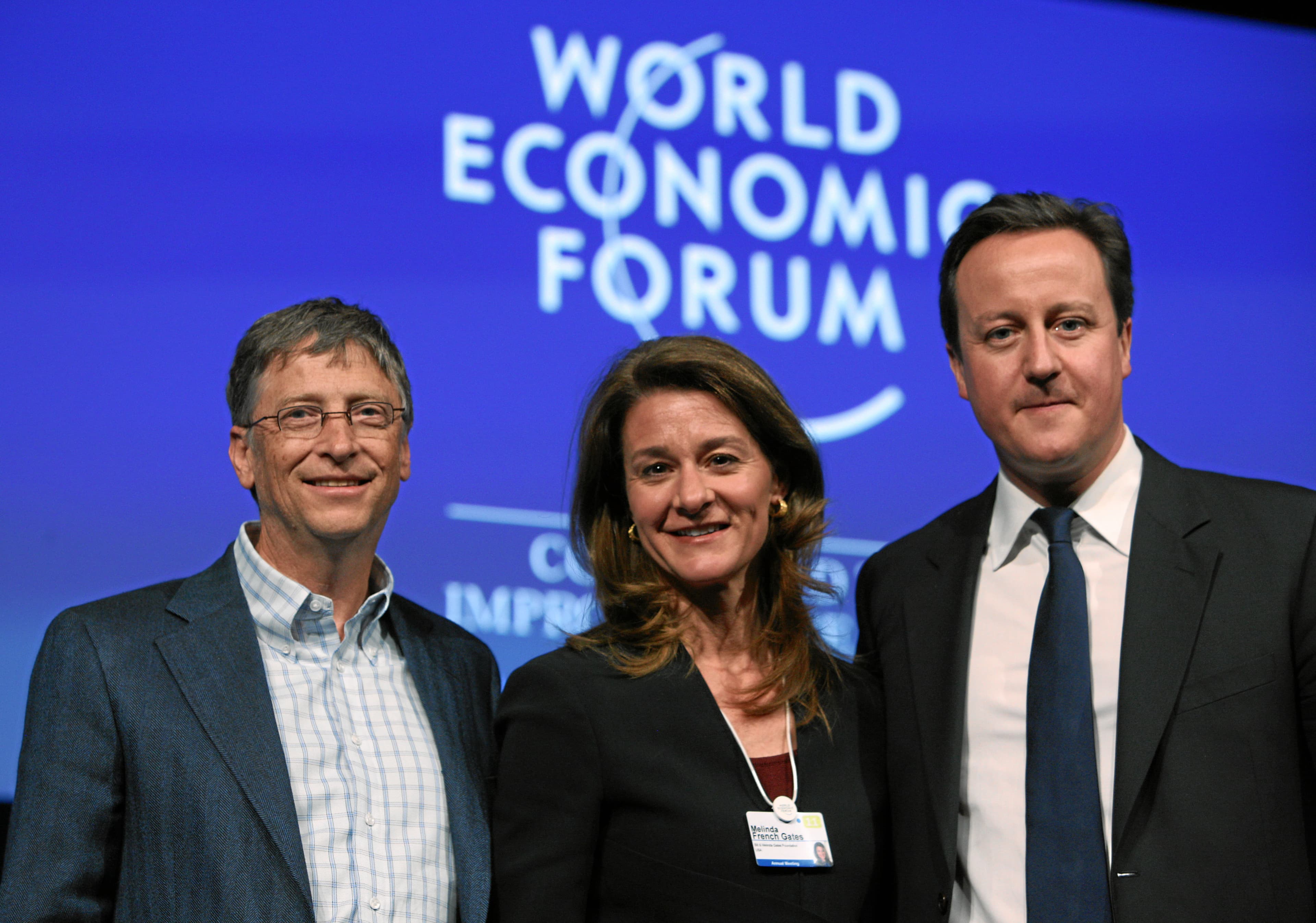
January 2000
Bill and Melinda Gates merged earlier family philanthropies to establish the Bill & Melinda Gates Foundation, headquartered in Seattle, Washington. It launched with an initial endowment of $28 billion and focused on global health, global development, and U.S. education. By 2023 the Foundation had paid out over $77 billion in grants and is widely recognized as the largest private charitable foundation in the world.
October 1999
The Gates Foundation awarded $2 million to the International Rescue Committee to strengthen and enlarge the IRC's health program for refugees around the world. The grant funded expansion of health services — including primary care, maternal health, and disease surveillance — in refugee camps across Africa, Asia, and the Balkans. It was one of the Gates Foundation's earliest grants to a humanitarian organisation and established the IRC as a long-term partner in the Foundation's refugee health work.
1999
The Gates Library Foundation was reorganized and renamed the Gates Learning Foundation to reflect a broadened mission extending beyond library technology access to encompass wider educational systems and opportunities. The new focus included secondary education reform and access to higher education for underserved communities. The Gates Learning Foundation and the William H. Gates Foundation were subsequently merged in January 2000 to create the Bill & Melinda Gates Foundation.
September 1999
The Gates Foundation committed $1 billion — the largest single grant to a scholarship program in U.S. history at that time — to create the Gates Millennium Scholars program. Administered by the United Negro College Fund, the program provides full scholarships to outstanding minority students demonstrating financial need and academic excellence. By 2022 the program had supported more than 20,000 scholars pursuing degrees across the United States.
1998
The Gates Library Foundation expanded its free computer and internet access program from the United States into Canada, ultimately equipping approximately 1,400 Canadian public libraries with around 4,000 computers. The initiative brought internet access to rural and low-income communities across Canada that previously had no other means of connectivity. It was one of the largest private investments in public library technology infrastructure in Canadian history, complementing the U.S. program that placed over 22,000 computers in roughly 4,500 American libraries.
1997
When Bill and Melinda Gates built their philanthropy, they recruited former Microsoft senior executive Patty Stonesifer to run it. Stonesifer led the Gates Foundation and its predecessor from 1997 — as president, co-chair, and ultimately CEO until 2008 — shaping the strategy and culture of what became the world's largest private charitable foundation. Her hiring signaled that Gates would bring serious management muscle, not just money, to global development; she later briefly served as interim CEO of The Washington Post.
1997
The Gates Foundation's global-health mission traces to a newspaper article. In 1997, Bill Gates read a piece about the millions of children in poor countries dying each year from preventable diseases such as rotavirus-driven diarrhea — and was stunned that a disease killing hundreds of thousands of kids drew so little money or attention. He sent the article to his father with a note: 'Maybe we can do something about this.' An early $40 million vaccine grant followed, seeding what became the world's largest private foundation and its focus on global health.
1997
Gates created the Gates Library Foundation — later the Gates Learning Foundation — to bridge the digital divide in American public libraries. The program donated over $250 million in computers, software, and internet connectivity to U.S. public libraries, with particular focus on libraries serving low-income communities. By 2003, the initiative had connected 99 percent of U.S. public libraries to the internet and trained over 7,000 library staff. This effort brought free internet access to millions of Americans who otherwise lacked it at home, making it one of the most impactful domestic technology equity programs in U.S. history. The foundation later merged into the Bill & Melinda Gates Foundation.
1995
Bill Gates established the William H. Gates Foundation, named after his father, as the direct precursor to today's Bill & Melinda Gates Foundation. Focused on global health and education, it began the philanthropic infrastructure that would grow into the world's largest private charitable foundation. The William H. Gates Foundation operated alongside the Gates Learning Foundation before the two merged in January 2000 to form the Bill & Melinda Gates Foundation with a combined endowment of $28 billion.
[RELATED_SUBFILES] · ls ../
node: archive-01 · link: encrypted · uptime: 99.98% · mirror: active
— EOF · nothing here is hidden, only documented —