Technology
[ARCHIVE_INDEX] · loading entries . . .
Bill Gates Accomplishments
Loading accomplishments…
[ARCHIVE_INDEX] · loading entries . . .
Loading accomplishments…
[SUBFILE] · /events/technology/ · access granted
From writing a BASIC interpreter for the Altair 8800 in 1975 to shipping MS-DOS, Windows 95, and backing today's AI and advanced nuclear computing ventures — these are the 107 verified technology accomplishments of the programmer who put a computer on every desk. Every entry is documented and sourced.
[ARCHIVE_FUNDING] · INDEPENDENT · NO ADS
One developer. >300 verified entries. Zero ads. Forever free.
No sponsors, no paywall, no algorithm. If this archive has been useful to you, reader support is what keeps it running.
January 2026
In his January 2026 'Year Ahead' annual letter and subsequent remarks, Bill Gates warned that an even greater risk than a natural pandemic is that 'a non-government group will use open source AI tools to design a bioterrorism weapon.' Gates identified two AI dangers he said society must manage — misuse by bad actors and disruption to jobs — and drew a comparison to COVID-19, invoking his 2015 TED talk about pandemic unpreparedness. He argued the technology must be deliberately developed, governed, and deployed, and urged governments to use 2026 to prepare before AI's risks become unmanageable.
2026
Bill Gates joined other funders backing a competition to harness artificial intelligence for Alzheimer's research, with the Alzheimer's Disease Data Initiative offering a $1 million first prize for 'agentic AI' that can accelerate discovery. The effort reflects Gates's growing personal focus on the brain — shaped by his father's experience with Alzheimer's — and his belief that AI and big data can speed progress in a field long marked by setbacks. Application rounds ran from 2025 into 2026.
January 2026
At the 2026 World Economic Forum, Bill Gates warned that artificial intelligence would dramatically reshape both white-collar and blue-collar work within roughly four to five years — and that most governments were unprepared. Gates suggested AI's impact would hit white-collar roles especially fast and reiterated his view that society may need to rethink work itself, even floating a two- or three-day work week. He called for governments to plan for retraining, tax changes, and equity as labor markets shift.
February 2026
Bill Gates's TerraPower announced a strategic collaboration with Sabey Data Centers to explore powering current and future data centers with its Natrium advanced-nuclear-plus-storage technology, including potential new plants in the Rocky Mountain region and Texas. The agreement reflected soaring electricity demand from AI and cloud computing and positioned TerraPower's reactor design as a source of firm, carbon-free power for the data-center industry. It followed TerraPower's separate nuclear deal with Meta.
February 2026
TerraPower, the advanced-nuclear company founded and chaired by Bill Gates, signed a deal with Meta to build up to eight Natrium reactors in the United States to help power the company's data centers, providing up to 2.8 gigawatts of electricity — and up to 4 gigawatts in shorter bursts using its molten-salt storage. The agreement, part of a wave of Big Tech nuclear deals to feed AI computing demand, would bring the first reactors online as soon as 2032. It marked a major commercial step for TerraPower beyond its demonstration plant in Wyoming.
March 2026
In March 2026 the U.S. Nuclear Regulatory Commission granted TerraPower — the advanced-nuclear company founded and chaired by Bill Gates — a construction permit for its 345-megawatt Natrium sodium-cooled fast reactor near Kemmerer, Wyoming, making it the first non-light-water advanced reactor in the United States cleared to move from design into nuclear construction. The company had already broken ground on the plant's non-nuclear systems in 2024 and completed the NRC's final safety evaluation in late 2025. TerraPower aims to begin commercial operation of the demonstration plant around 2030, pairing the reactor with a molten-salt energy-storage system to follow fluctuating grid demand. Gates has promoted the design as a route to firm, carbon-free power.
January 2026
In January 2026, the Gates Foundation awarded $4.98 million to Heritable Agriculture — an AI crop improvement company spun from Google X — for the JASON project, deploying a cloud-based AI genomics engine to identify drought and heat tolerance gene targets in staple crops for LMIC smallholder farmers. JASON aims to compress conventional crop breeding timelines and deliver climate-resilient germplasm faster to the nearly 2 billion people whose incomes depend on smallholder agriculture.
May 2026
On May 14, 2026, the Gates Foundation and Anthropic announced a $200 million four-year partnership — the largest between an AI company and a global philanthropy — combining grants, AI credits, and technical support. The partnership deploys AI to screen drug and vaccine candidates, detect patterns in systematic health reviews, and support smallholder farming decisions with locally customised crop knowledge in sub-Saharan Africa and India. Education initiatives include AI-powered tutoring for K-12 students and foundational literacy tools across Africa and India.
January 2026
Gates participated in a high-profile discussion at the World Economic Forum Annual Meeting in Davos on artificial intelligence's transformative potential for global healthcare, particularly in low- and middle-income countries. The discussion coincided with the announcement of the Horizon 1000 initiative with OpenAI — a $50 million program to deploy AI health tools in 1,000 primary care clinics across sub-Saharan Africa. Gates argued that AI could compress decades of health system development into years by enabling community health workers to provide high-quality diagnostic support.
April 2025
Bill Gates's Breakthrough Energy Ventures is among the backers of Electra, a Colorado startup developing a way to make iron for steel without carbon emissions; in April 2025 Electra raised $129 million (bringing its total to $214 million) to scale a process that uses electricity to separate iron from ore at temperatures 'cooler than coffee.' Steelmaking is one of the largest industrial sources of greenhouse gases, and Gates has long argued that hard-to-decarbonize sectors need breakthrough technologies, not just renewables. Electra aims to run a 50,000-ton plant by 2029 and a million-ton plant in the early 2030s.
January 2025
In January 2025 KoBold Metals — an AI-driven minerals-exploration company backed by Bill Gates's Breakthrough Energy Ventures and Jeff Bezos — raised $537 million at a valuation near $3 billion. KoBold uses artificial intelligence to analyze vast scientific datasets and locate deposits of copper, lithium, and nickel critical to electric vehicles, batteries, and data-center infrastructure. The round, led by Durable Capital Partners and T. Rowe Price funds, underscored investor appetite for technologies that speed the hunt for the critical minerals underpinning the energy transition. Gates has championed such 'climate plus AI' bets through Breakthrough Energy.
December 2025
In December 2025 Bill Gates said the world is in an AI bubble — but a nuanced one. Speaking on CNBC, Gates argued that 'AI is only a bubble in the sense that not all of these valuations will end up going up; some of them will go down,' predicting the industry will be 'hyper competitive' and that 'a reasonable percentage of those companies won't be worth that much.' At the same time he called AI 'a deeply profound technology that will reshape the world,' explicitly distinguishing the moment from the 1630s Dutch 'tulip mania.' His comments added a measured voice to debates about whether AI valuations had run ahead of reality.
2025
During his India engagements, Bill Gates discussed using artificial intelligence and predictive analytics to improve public-service delivery with leaders including Andhra Pradesh Chief Minister N. Chandrababu Naidu, exploring applications across healthcare, education, agriculture, and employment. The talks reflected the Gates Foundation's deepening work with Indian state governments on technology-enabled development. India has positioned itself as a hub for AI in public services, attracting major global technology engagement.
February 2025
Bill Gates has championed AI tutors — such as Khan Academy's Khanmigo — as a route to universal, personalized education, arguing that AI can understand pedagogy and motivation, gauge student engagement, and adapt in real time so no learner is left behind. Speaking at Harvard in early 2025, Gates framed affordable AI tutoring as a potential equalizer for students who lack access to one-on-one help, pointing to classroom pilots in Newark, New Jersey. He has also cautioned that human teachers remain essential to the experience.
April 2025
To mark Microsoft's 50th anniversary on April 4, 2025, Bill Gates appeared on stage with former CEO Steve Ballmer and current CEO Satya Nadella for the first time in over a decade, in an unusual interview conducted by Microsoft's Copilot AI assistant. Gates joked about his coding past — 'I wrote more code than either of these guys, but when it comes to picking people, motivating people, thank god for Steve and Satya' — and said his advice to his younger self would be to 'watch out for the government,' a nod to Microsoft's antitrust battles. The session capped the company's anniversary celebrations.
August 2025
In August 2025 Bill Gates — through Breakthrough Energy Ventures — joined Nvidia, Google, and others in an $863 million funding round for Commonwealth Fusion Systems, bringing the fusion startup's total raised to nearly $3 billion, the most ever for a fusion company. CFS is building a prototype reactor called SPARC near Boston and aims to demonstrate net-energy fusion in 2027 before constructing a commercial plant, ARC, in Virginia. Google has agreed to buy 200 megawatts of power from ARC, reflecting surging interest in carbon-free energy for AI data centers.
April 2025
For Microsoft's 50th anniversary on April 4, 2025, Bill Gates published the original source code for Altair BASIC — the roughly 150-page Intel 8080 assembly-language program he and Paul Allen wrote in 1975 to run on the MITS Altair 8800 — calling it 'the coolest code I've ever written.' Gates reflected on hunching over a PDP-10 in Harvard's computer lab to write what became Microsoft's first product, inspired by the January 1975 issue of Popular Electronics featuring the Altair. The release made the foundational code publicly viewable as a piece of computing history. The milestone prompted broader reflection from Gates on the company's arc from a two-person startup to a global technology giant.
March 2025
In interviews in early 2025, including on NBC's 'The Tonight Show' and in a conversation with Harvard professor Arthur Brooks, Bill Gates predicted that within about ten years artificial intelligence would perform much of the work of doctors and teachers, providing high-quality medical advice and tutoring at little or no cost — a shift he called the rise of 'free intelligence.' Gates suggested that as AI takes over more tasks, society may need to rethink work itself, asking whether people might end up working 'just two or three days a week.' He framed the change as both an opportunity to expand access to expertise and a disruption that humanity would have to manage. The remarks drew wide attention and debate about AI's impact on professional jobs.
October 2024
The Gates Foundation awarded $3.87 million to IITA and Pairwise for the YOAGE (Yam Optimized Architecture through Gene Editing) project, using Pairwise's CRISPR Fulcrum platform to develop semi-dwarf, bushy yam varieties suitable for mechanised farming in Nigeria. Nigeria produces 66 percent of the world's yams; traditional cultivation requires labour-intensive pole staking. Gene-edited compact varieties cut labour costs, enable mechanical harvesting, and improve smallholder incomes for one of West Africa's most important food and income crops.
October 2023
The Gates Foundation allocated $20 million to Quantoom Biosciences — the evolved form of Belgian biotech Univercells, which Gates had backed from 2016 — to develop compact, modular mRNA manufacturing systems designed to cut vaccine production costs by 50 percent. Quantoom's platform fits in a standard shipping container, enabling governments to establish domestic mRNA manufacturing at a fraction of the capital cost of conventional vaccine plants. The technology targets the structural bottleneck that keeps mRNA vaccines unaffordable in low-income countries.
March 21, 2023
Gates published a widely-shared essay arguing that AI is the most revolutionary technology since the graphical user interface, with potential to accelerate scientific discovery, reduce global inequality, and reshape education and healthcare. He described watching GPT-4 pass an AP Biology exam as the most impressive technology demonstration he had seen in decades, alongside the development of the original Windows interface.
2022
Bill Gates has been the driving investor behind Kymeta, a Redmond, Washington company he helped start in the 2010s that builds flat-panel 'metamaterial' antennas — which steer a satellite signal electronically, with no moving parts — to deliver internet to vehicles, ships, and remote sites. Gates led an $85 million round in 2020 and another $84 million round in 2022, backing a long-running bet that such antennas could knit together satellite and cellular networks for connectivity almost anywhere.
February 2020
The Gates Foundation supported the Sentinel surveillance system, a collaboration between the Broad Institute and the African Centre of Excellence for Genomics of Infectious Diseases (ACEGID) in Nigeria. Sentinel was officially deployed in West Africa one month before COVID-19 was declared a pandemic and by February 2020 had established rapid PCR testing and whole-genome sequencing capacity in hospitals across Sierra Leone, Senegal, and Nigeria. The network demonstrated real-time pathogen surveillance at a continental scale, sequencing local SARS-CoV-2 genomes within days of cases being detected.
October 2019
On October 18, 2019 — fourteen weeks before SARS-CoV-2 was identified — the Gates Foundation, Johns Hopkins Center for Health Security, and the World Economic Forum jointly hosted Event 201, a high-level tabletop pandemic simulation exercise in New York. The exercise modelled a fictional coronavirus pandemic originating in pigs and spreading globally, and highlighted critical gaps in public-private co-ordination, health communication, and medical countermeasure supply chains. Event 201's recommendations — published in November 2019 — closely anticipated the actual challenges that emerged during COVID-19 in early 2020.
2019
Gates-linked investors backed Ginkgo Bioworks, a Boston-based synthetic biology company that operates a high-throughput organism engineering platform for designing microbes with valuable capabilities — including nitrogen-fixing organisms for agriculture, fragrances, pharmaceutical ingredients, and biosecurity applications. Ginkgo's work in agricultural synthetic biology addresses one of the most energy-intensive industrial processes on Earth: the Haber-Bosch nitrogen fixation process that produces synthetic fertilizer consumes roughly 2% of global energy. Engineering crops or soil microbes to fix nitrogen biologically could dramatically reduce both fossil fuel consumption and the nitrogen pollution degrading the world's waterways.
November 2019
Gates-backed Heliogen announced it had achieved — for the first time commercially — solar energy concentrated to temperatures above 1,000°C using an array of AI-controlled mirrors that precisely focused sunlight on a single point. At 1,000°C, Heliogen can replace fossil fuels in cement, steel, and petrochemical production — the industrial processes responsible for roughly 20% of global CO2 emissions. At 1,500°C the system can split water or CO2 to produce clean hydrogen or syngas. CNN reported the breakthrough as a potential turning point for industrial decarbonization, with Gates calling it an example of what happens when you apply technology smartly to a hard problem.
2019
Gates backed Heliogen, a company using AI-controlled mirrors (heliostats) to concentrate sunlight to temperatures exceeding 1,000°C — sufficient to replace fossil fuels in cement, glass, and steel manufacturing, which together account for roughly 20% of global CO₂ emissions. Heliogen's approach addresses one of the hardest-to-decarbonize sectors: industrial process heat. The company went public in 2021.
2018
In 2018, Bill Gates was among the lead backers of EarthNow, a Bellevue, Washington startup promising near-real-time live video of almost anywhere on the planet via a planned constellation of about 500 low-Earth-orbit satellites, with co-investors including SoftBank, Airbus, and OneWeb founder Greg Wyler. Pitched for uses from disaster monitoring and illegal-fishing detection to tracking conflict zones, it also drew 'planetary surveillance' concerns; the venture struggled to advance and faded, but it underscored Gates's long interest in satellite connectivity and imaging.
2018
The Gates Foundation committed $10 million to support MOSIP (Modular Open Source Identity Platform), a flexible, customisable digital ID system developed at the International Institute of Information Technology Bangalore. MOSIP allows governments to build sovereign national ID systems without being locked into proprietary foreign software. Deployments have registered more than 90 million citizens in the Philippines, Ethiopia, and Morocco. Gates funding positioned MOSIP as the open-source alternative to commercial digital ID infrastructure for low- and middle-income countries.
2017
In a February 2017 interview with Quartz, Bill Gates floated a provocative idea for cushioning the disruption of automation: tax the robots. Gates argued that if a human worker's $50,000 of labor is taxed, a robot doing the same job should be taxed at a similar level, with the revenue funding retraining and human-centered work in caregiving and education. The 'robot tax' drew both praise and sharp criticism from economists, and a similar measure was debated and rejected by the European Parliament; it remains one of Gates's most-discussed policy ideas.
2016
The Gates Foundation, alongside USAID and other donors, funded Digital Square — a global initiative housed at PATH — to improve how governments design, procure, and pay for digital health technologies. Digital Square promotes interoperability standards, funds development of open-source global goods (including OpenHIE, OpenMRS, and OpenLMIS), and helps countries avoid vendor lock-in for their health information infrastructure. Its work directly shapes the surveillance plumbing of health systems in more than 40 low- and middle-income countries, determining how disease data flows from community health workers to national dashboards.
2016
The Gates Foundation supported ID2020, a public-private partnership founded with the mission of providing legal digital identity to the estimated 1.1 billion people worldwide who lack official identification. Partnering organisations include Microsoft — co-founded by Gates — Gavi, Accenture, IDEO, and Rockefeller Foundation. ID2020 piloted biometrically-linked digital health IDs for refugee populations in Bangladesh, where vaccination records were tied to a unique digital identifier so children could not receive duplicate doses or miss immunisations through lost paper records.
2015
In a January 2015 Reddit 'Ask Me Anything,' Bill Gates aligned himself with Elon Musk and Stephen Hawking in warning about the long-term risks of artificial intelligence. 'I am in the camp that is concerned about super intelligence,' Gates wrote, predicting AI would first be manageable and beneficial but that 'a few decades after that the intelligence is strong enough to be a concern,' adding he didn't 'understand why some people are not concerned.' The remarks, years before the generative-AI boom, established Gates as an early high-profile voice urging caution about advanced AI.
2015
Following Gates's high-profile demonstration of drinking water processed from sewage in January 2015, the Gates Foundation funded the deployment of a full-scale Janicki OmniProcessor unit in Dakar, Senegal — the first operational municipal fecal sludge-to-energy plant in the developing world. The machine processed sludge collected from pit latrines and septic tanks, producing up to 86,000 liters of clean drinking water per day and generating surplus electricity for the grid. The Dakar pilot proved that the OmniProcessor could operate profitably in a developing-world context, serving as a model for urban sanitation in cities where conventional sewage infrastructure is decades away.
January 2015
Gates visited the Janicki Bioenergy facility and publicly drank a glass of water that had been processed from raw sewage by the OmniProcessor — a machine that simultaneously produces clean drinking water, electricity, and ash from fecal sludge. He shared the demonstration on GatesNotes, noting the machine could serve communities where 2 billion people still lack access to adequate sanitation. The stunt generated worldwide media coverage and helped accelerate a pilot deployment in Dakar, Senegal.
August 14, 2012
At the first Reinvent the Toilet Fair in Seattle, organized by the Gates Foundation, participants from 29 countries showcased prototype toilets that required no water, sewer connection, or external electricity. The standout design — from the California Institute of Technology — used a solar panel to power an electrochemical reactor that treated human waste and produced hydrogen gas for a fuel cell, generating net electricity. Other designs converted waste to charcoal, fuel gas, or fertilizer. Gates called the fair a proof of concept that the 200-year-old flush toilet could be replaced by 21st century sanitation technology appropriate for the 2.5 billion people without access to safe sanitation.
2011
Inspired by a lecture series from historian David Christian, Bill Gates personally funded the Big History Project — a free online course that traces a single sweeping narrative from the Big Bang through the present, weaving together physics, chemistry, biology, and human history. Launched around 2011 and offered free to schools and the public, it reflected Gates's belief in accessible, interdisciplinary education; he has called Big History his favorite course of all time. The project later grew into the broader OER Project of free learning materials.
2010
Bill Gates is an investor in and contributor to Intellectual Ventures, the patent-licensing firm founded in 2000 by former Microsoft chief technology officer Nathan Myhrvold. Gates has taken part in the firm's 'invention sessions,' and his name appears on resulting patent applications. Intellectual Ventures amassed tens of thousands of patents without making products of its own and earned hundreds of millions of dollars by demanding licensing fees from other companies — a model critics, including a widely heard 2011 'This American Life' investigation, condemned as that of a 'patent troll' that taxes innovation. Intellectual Ventures rejected the characterization, saying it pays inventors and runs a legitimate market for ideas. The venture tied one of the world's richest men to a business many technologists revile.
2010
The Gates Foundation became a major financial partner of DHIS2 (District Health Information Software 2), an open-source health management information platform developed at the University of Oslo. DHIS2 is now deployed in more than 70 countries covering over 40 percent of the global population, serving as the primary data collection backbone for routine health surveillance, disease tracking, and system performance monitoring. Gates funding supported its adoption across sub-Saharan Africa, where it became the standard platform for tracking immunisation coverage, malaria cases, maternal health indicators, and outbreak signals.
2008
In 2008, as he transitioned out of full-time work at Microsoft, Bill Gates founded bgC3 — short for 'Bill Gates Catalyst 3' — a small private think tank and incubator to support his interests across science, technology, and his foundation. The low-profile venture provided analytical and advisory horsepower for Gates's wide-ranging projects, from energy to global health, serving as a personal hub for ideas as he shifted the center of his work from software to philanthropy.
2008
Bill Gates delivered his final keynote as a full-time Microsoft executive at the 2008 Consumer Electronics Show, opening with a comedic mock video of his 'last day' at the company. The star-studded skit featured cameos from figures including Jay-Z, Bono, Steven Spielberg, George Clooney, and then-candidates Hillary Clinton and Barack Obama, poking fun at Gates as he searched for a post-Microsoft purpose. The lighthearted send-off marked the end of an era as Gates prepared to shift to philanthropy.
2008
The Gates Foundation created the Institute for Disease Modeling (IDM) in 2008 through the Global Good Fund to develop open-source, high-fidelity epidemic simulation tools for malaria, HIV, tuberculosis, polio, and dengue. IDM's EMOD individual-based modelling platform is released publicly and directly informs BMGF grantees' vaccination strategies in sub-Saharan Africa. In 2020, IDM released Covasim — a Python COVID-19 agent-based model — adopted by state governments for pandemic decision-making and researchers worldwide.
2007
Windows Vista, released in 2007 during Bill Gates's final years as chief software architect, arrived years late and to a frosty reception — criticized for hardware demands, driver problems, and intrusive security prompts. Though it introduced lasting features, Vista is remembered as one of Microsoft's notable stumbles, prompting the well-received Windows 7 as a course-correction.
2007
The Gates Foundation granted $105 million to the University of Washington to establish the Institute for Health Metrics and Evaluation (IHME) — an independent global health research centre tasked with producing comprehensive, comparable data on the world's most pressing health challenges. IHME's flagship output, the Global Burden of Disease study, became the most widely cited source of data on disease prevalence, mortality, risk factors, and health system performance across 204 countries, fundamentally reshaping how governments, donors, and researchers allocate global health resources.
2006
In 2006 Microsoft launched the Zune, a portable media player meant to challenge Apple's dominant iPod. Despite some well-regarded hardware and features like wireless sharing, the Zune never gained meaningful market share and was discontinued in 2011 — becoming a byword for Microsoft's struggles in consumer devices. Though Bill Gates had begun stepping back from day-to-day operations by the time it shipped, the Zune is remembered as one of the era's notable Microsoft flops.
2006
When Bill Gates announced in 2006 that he would transition out of his full-time role at Microsoft, he handed his title of Chief Software Architect to Ray Ozzie, the creator of Lotus Notes whom Microsoft had acquired via Groove Networks. Ozzie was tasked with steering Microsoft into cloud computing and services, championing efforts that grew into Windows Azure. The succession marked a symbolic passing of Gates's technical mantle as he prepared to devote himself to philanthropy.
2003
Microsoft launched OneNote in 2003, a free-form digital note-taking application that let users mix text, images, drawings, and clippings on an infinite canvas. Initially tied to Bill Gates's Tablet PC vision, OneNote became a popular part of Microsoft Office and a widely used tool for students and professionals.
2002
Bill Gates personally championed the Tablet PC, a pen-based Windows computer that Microsoft launched in 2002, predicting tablets would become the most popular form of PC within five years. The early Tablet PCs were bulky and never reached the mass market, and it was Apple's iPad, years later, that fulfilled the vision — making the Tablet PC a notable case of Gates being right about the idea but early on the execution.
2002
In 2002 Microsoft released the .NET Framework, an ambitious software platform — heavily promoted by Bill Gates — for building and running Windows and web applications across multiple programming languages. .NET reshaped how developers wrote software for Microsoft platforms and remained a foundation of the company's developer ecosystem for decades.
2002
On January 15, 2002, amid a wave of damaging worms and security flaws, Bill Gates sent a company-wide email launching the 'Trustworthy Computing' initiative, declaring that security and privacy had to come before adding new features. Computing, he wrote, should become 'as available, reliable and secure as standard services such as electricity, water services, and telephony.' Microsoft halted Windows development for weeks to retrain engineers, and the memo gave rise to the Security Development Lifecycle, reshaping how the industry approached software security.
February 13, 2002
Microsoft released the .NET Framework 1.0, a managed software platform for building and running Windows applications across consistent runtime, class library, and language ecosystem. Gates oversaw .NET as a strategic response to Java, aiming to unify Microsoft's developer story across products. The platform evolved into .NET Core and modern .NET, which is now among the most widely deployed developer frameworks globally.
2001
Around 2001 Microsoft promoted Passport, a single sign-on identity service, as part of an ambitious initiative code-named 'Hailstorm' to put Microsoft at the center of online identity and personal data. Privacy concerns and industry pushback doomed the grand vision, and Hailstorm was scaled back — an early, cautionary chapter in the long fight over who controls digital identity, waged during Bill Gates's tenure.
2001
Microsoft introduced SharePoint in 2001, a platform for document sharing, intranets, and team collaboration that became deeply embedded in corporate IT. SharePoint grew into a multibillion-dollar product line and a sticky part of Microsoft's enterprise offerings, extending the company's reach into how organizations managed information during and after the Gates era.
2001
Windows XP, released in 2001, merged Microsoft's consumer and business operating-system lines onto the stable Windows NT core and became one of the most popular and longest-lived versions of Windows ever. Beloved for its reliability, it remained in wide use for well over a decade, underscoring the dominance of the platform Bill Gates had built the company around.
November 15, 2001
Microsoft entered the video game console market with the Xbox, competing head-to-head with Sony's PlayStation 2 and Nintendo's GameCube. Gates personally championed the project after recognizing the living-room console as a threat to Windows as the center of home computing. Halo: Combat Evolved shipped as a launch title and became one of the best-reviewed games of the year. The Xbox eventually sold over 24 million units and established the platform that grew into the Xbox 360 and Xbox Series lines.
2000
Released in 2000 while Bill Gates served as Microsoft's chief software architect, Windows Millennium Edition (Windows Me) became one of the most derided products in the company's history. Rushed out as a stopgap for home users between Windows 98 and Windows XP, it was plagued by instability, crashes, and hardware-compatibility problems; PCWorld later dubbed it the 'Mistake Edition' and ranked it among the worst tech products of all time. It stands as a notable misfire in the Windows line Gates built.
2000
Building on Windows CE, Microsoft launched the Pocket PC platform in 2000 to bring Windows-style computing to handheld PDAs and, later, smartphones. Though Microsoft was an early mover in mobile, it ultimately lost the smartphone market to Apple and Google — a defeat Bill Gates would later call one of his greatest business mistakes.
1999
Microsoft launched MSN Messenger in 1999 to compete with AOL Instant Messenger, and it grew into one of the most popular instant-messaging services of the 2000s, with hundreds of millions of users worldwide. The product was part of Microsoft's broader push, under Bill Gates, to dominate consumer internet communication before social media and smartphones reshaped how people chatted online.
1998
In 1998 a set of leaked internal Microsoft memos — dubbed the 'Halloween documents' because the first surfaced around Halloween — revealed the company's strategy for countering the rising threat of open-source software and Linux. The memos discussed tactics such as 'de-commoditizing protocols' to blunt open standards, and were seized on by the free-software movement as evidence of a 'embrace, extend, extinguish' approach. The leak became a landmark moment in the rivalry between Microsoft and the open-source world.
1998
On April 20, 1998, during a COMDEX presentation in Chicago, Microsoft suffered one of tech's most famous demo disasters: as an assistant plugged a scanner into a PC to show off Windows 98's plug-and-play feature, the machine crashed into a Blue Screen of Death in front of thousands — with Bill Gates standing right there. Gates drew laughter and defused the moment by quipping, 'That must be why we're not shipping Windows 98 yet.' The clip became an enduring symbol of the reliability problems Microsoft would later confront head-on.
November 1998
Microsoft opened Microsoft Research Asia (MSRA) in Beijing, establishing what became one of the most productive computer science research labs in the world. The lab recruited leading Chinese academics and produced foundational work in computer vision, natural language processing, and machine learning. MSRA alumni went on to lead major Chinese technology companies — earning the lab the nickname 'the cradle of Chinese AI.' By 2023 it had published more than 6,000 peer-reviewed papers.
1997
With Office 97 Microsoft introduced the Office Assistant — most famously the animated paperclip 'Clippit,' universally known as Clippy — meant to help users with on-screen tips. Widely mocked as intrusive and annoying, Clippy was eventually switched off by default and retired, becoming an enduring symbol of well-intentioned software design gone wrong during the Bill Gates era.
1997
Microsoft introduced Outlook in 1997 as the email, calendar, and contacts hub of Microsoft Office. Tightly paired with Exchange Server in corporate settings, Outlook became the default communications tool for hundreds of millions of office workers worldwide and one of the most heavily used pieces of business software of the Gates era.
1996
Bill Gates's 1995 bestseller 'The Road Ahead' is now remembered partly for what it got wrong: the first edition centered on a coming 'information superhighway' and mentioned the internet only in passing, reflecting Microsoft's early bet on its proprietary MSN service. As the open internet exploded, Gates reversed course fast — issuing his 1995 'Internet Tidal Wave' memo and substantially rewriting the book for its 1996 paperback, adding some 20,000 words to acknowledge the internet was transforming everything faster than even he had anticipated. It stands as a notable case of Gates being slow to see a shift, then pivoting hard.
1996
In 1996 Microsoft acquired Vermeer Technologies for about $130 million to obtain FrontPage, a tool that let ordinary users build websites without coding. The deal was part of Bill Gates's urgent pivot to the internet after his 'Internet Tidal Wave' memo, as Microsoft scrambled to put web-publishing tools into the hands of millions.
1996
Microsoft released Exchange Server in 1996, a corporate email and calendaring system that — combined with Outlook on the desktop — became the backbone of business communication for organizations around the world. Exchange anchored Microsoft's enterprise server strategy and reflected Bill Gates's drive to make Microsoft indispensable to companies, not just consumers.
1996
Microsoft launched the official Chinese-language edition of Windows 95 in a ceremony at Beijing's Forbidden City. By the end of 1995 the company had established 300 authorized dealers and 30 training centers across China. Despite rampant software piracy that limited direct revenue, the launch established Microsoft's brand with Chinese consumers and corporations at a critical moment in the country's rapid PC market growth.
1995
In 1995 Microsoft released DirectX, a set of programming interfaces that let games and multimedia software tap a PC's graphics and sound hardware directly under Windows. DirectX helped turn Windows into a serious gaming platform — rather than ceding games to MS-DOS — and later underpinned the Xbox, a key piece of Microsoft's push into entertainment during Bill Gates's leadership.
1995
Alongside Windows 95 in August 1995, Microsoft launched MSN — The Microsoft Network — an online service meant to rival America Online with email, chat, and curated content built into the operating system. Bundling MSN with Windows drew antitrust scrutiny, and the service repeatedly reinvented itself as the open web overtook walled gardens. MSN reflected Bill Gates's scramble to position Microsoft for the internet era, a pivot he would soon make central to the company's strategy.
1995
In 1995 Microsoft released Bob, a 'social interface' that replaced the desktop with a cartoon living room and animated helper characters meant to make computing approachable for beginners. Widely panned as condescending and clunky, Bob was discontinued within about a year and became one of Microsoft's most famous failures — a staple cautionary tale in software design. Its legacy lingered, however, in the later 'Clippy' Office assistant and, by some accounts, in the Comic Sans typeface.
August 16, 1995
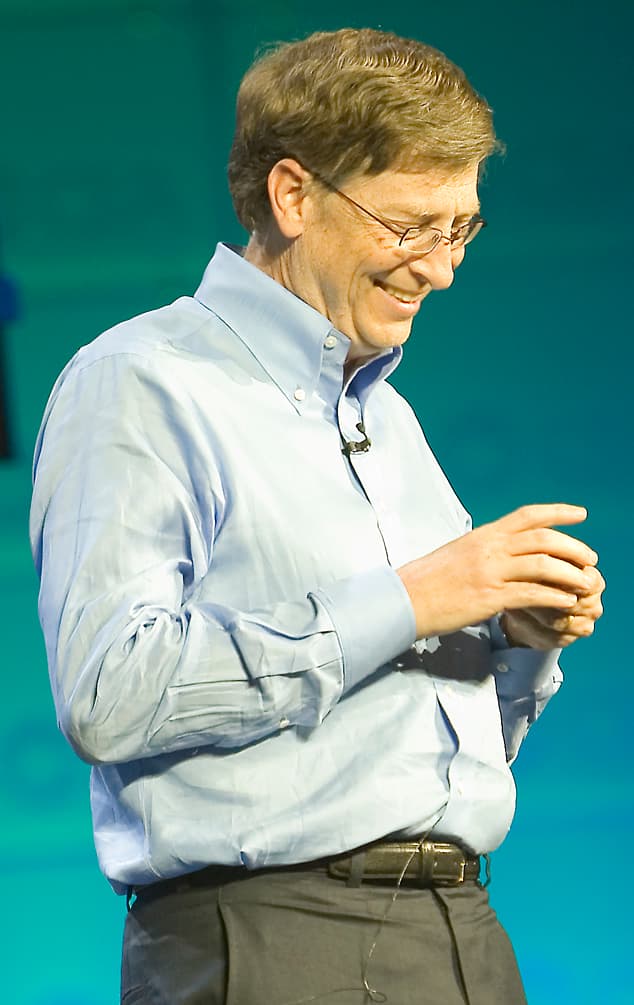
Microsoft released Internet Explorer 1.0 and bundled it with Windows 95, directly challenging Netscape Navigator's dominance of the early web. Gates had authored his famous 'Internet Tidal Wave' memo just months earlier, and IE's bundling strategy rapidly eroded Netscape's market share — rising from zero to over 90% by the early 2000s. The tactic was central to the landmark U.S. antitrust case United States v. Microsoft, in which the DOJ argued that bundling a free browser with the OS constituted illegal monopoly maintenance. The browser wars reshaped how software was distributed, priced, and bundled for a generation.
May 26, 1995
Gates distributed an internal memo titled 'The Internet Tidal Wave' to Microsoft's senior leadership, declaring the internet the most important single development since the IBM PC and redirecting every major product toward internet integration. The memo accelerated development of Internet Explorer and fundamentally changed how Microsoft competed against Netscape. It is studied in business schools worldwide as a model of decisive strategic pivot in response to emerging technology.
August 24, 1995
Microsoft released Windows 95, introducing the Start menu, 32-bit multitasking, and Plug and Play hardware support. The launch was a global cultural event: stores opened at midnight, queues stretched around blocks, and the Rolling Stones' 'Start Me Up' played in TV ads. Over a million copies sold in the first four days, cementing the personal computer as a household staple and making Gates a household name.
1993
Microsoft launched Visual C++ in 1993, a flagship developer toolset for building high-performance Windows applications in C and C++. Alongside Visual Basic, it was central to Bill Gates's strategy of winning over software developers, whose applications made Windows the must-have platform. Visual C++ later became a cornerstone of the Visual Studio suite.
January 1993
Microsoft Encarta was the world's first mass-market multimedia encyclopedia delivered on CD-ROM, developed under Gates's product vision. It combined text with photographs, audio clips, video, and interactive animations in a way no print encyclopedia could match. Encarta sold over 100 million copies across its lifetime and was the dominant home reference product of the 1990s. Its commercial success demonstrated the viability of the CD-ROM as a software distribution medium and effectively ended the era of door-to-door encyclopedia sales, with Encyclopaedia Britannica eventually halting its print edition in 2012.
July 27, 1993
Windows NT was Microsoft's first 32-bit operating system built from the ground up for enterprise reliability, developed under Gates's strategic direction with architect Dave Cutler. Unlike the consumer Windows line, NT used a fully protected memory model, supported symmetric multiprocessing, and was designed for network servers and corporate workstations. It became the technological foundation for every subsequent Windows release — Windows 2000, XP, Vista, 7, 10, and 11 all descend directly from the NT kernel, making it one of the most consequential software architecture decisions in computing history.
1992
Microsoft released Access in 1992, a desktop relational-database program that let non-programmers build simple data applications and became part of Microsoft Office's professional editions. Access made database tools accessible to small businesses and power users, extending Microsoft's applications dominance under Bill Gates beyond word processing and spreadsheets.
1992
Microsoft released Windows 3.1 in 1992, building on the breakthrough Windows 3.0 with scalable TrueType fonts, improved multimedia, and better stability. It sold millions of copies in its first months and helped cement the graphical Windows interface — championed by Bill Gates — as the default way people used PCs, paving the road to Windows 95.
1991
Microsoft released Money in 1991 to compete with Intuit's Quicken in personal-finance software, letting users track budgets, accounts, and investments. Despite years of effort — and a failed attempt to acquire Intuit that antitrust regulators blocked — Money never overtook Quicken, and Microsoft eventually discontinued it, a rare consumer category the Gates-era giant could not conquer.
1991
In 1991 Bill Gates created Microsoft Research, an in-house basic-research lab modeled on storied institutions like Bell Labs, and tapped his polymath chief technology officer Nathan Myhrvold to help build it. The lab pursued long-horizon work in areas from artificial intelligence and cryptography to graphics and natural-language processing, growing into one of the largest corporate research organizations in computing. Gates saw it as essential to keeping Microsoft at the technological frontier.
1991
At Comdex in 1991 Microsoft introduced Visual Basic, a tool that let developers build Windows applications by dragging and dropping visual components rather than hand-coding every interface element. By dramatically lowering the barrier to Windows software development, Visual Basic seeded a vast ecosystem of business applications and made millions of people — many of them non-professional programmers — productive on the platform. It became one of the most popular development environments of the 1990s and tightened Windows's grip on developers.
September 27, 1991
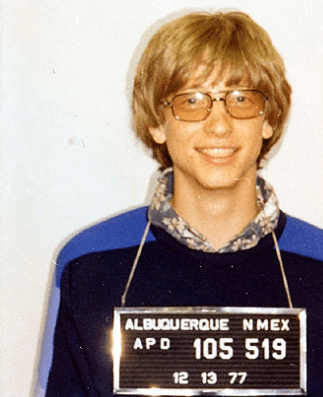
Gates established Microsoft Research as a dedicated basic-research division, modeled on Bell Labs and Xerox PARC. The lab recruited world-class computer scientists to work without product deadlines, producing foundational advances in natural language processing, computer vision, cryptography, and machine learning. Microsoft Research became one of the world's premier academic-style computing laboratories, whose work directly shaped products from Bing and Cortana to Azure AI. It has published thousands of peer-reviewed papers and produced multiple Turing Award recipients.
1990
In 1985 Microsoft and IBM agreed to jointly develop OS/2, an advanced operating system intended to succeed MS-DOS. But as Microsoft's own Windows gained momentum — especially after the hit Windows 3.0 in 1990 — the partners' priorities diverged, and the alliance unraveled around 1990-1991. Microsoft bet everything on Windows while IBM carried OS/2 largely alone; Windows went on to dominate the PC, and OS/2 faded. The 'divorce' cemented Microsoft's independent control of the operating-system business.
May 22, 1990
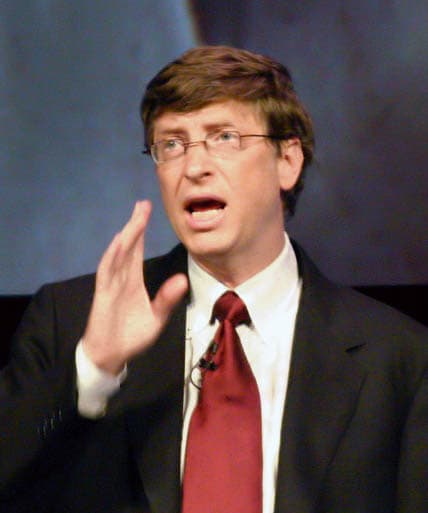
Windows 3.0 was Microsoft's breakthrough graphical operating system, selling over 2 million copies in its first six months on the market. It introduced the Program Manager, File Manager, and a vastly improved memory model that made it practical on standard PC hardware. The release marked the first time Windows achieved genuine mainstream commercial success, decisively outpacing IBM's competing OS/2 and cementing Microsoft's dominance in the PC software market.
1989
In 1989 Microsoft shipped its first version of SQL Server, a relational database originally built with Sybase, marking the company's entry into the enterprise data market. SQL Server grew into a pillar of Microsoft's server business and a direct competitor to Oracle and IBM, part of Bill Gates's push to take Microsoft beyond desktop software into the corporate data center.
1987
In 1987 Microsoft released Bookshelf, a reference collection — dictionary, thesaurus, almanac, quotations, and more — packed onto a single CD-ROM, at a time when most PCs had no CD drive. It was a deliberate bet by Bill Gates on CD-ROM as the future of 'multimedia' computing and electronic publishing, helping seed demand for the drives and pointing toward later Microsoft titles like Encarta. Bookshelf showcased Gates's conviction that vast reference libraries would become 'information at your fingertips.'
1987
Microsoft Works, first released in 1987, was an affordable, lightweight suite combining a word processor, spreadsheet, and database aimed at home users and bundled on countless low-cost PCs. A budget counterpart to the more powerful Microsoft Office, Works helped seed Microsoft software into millions of households during Bill Gates's drive to put 'a computer on every desk and in every home.'
1987
Microsoft released Windows 2.0 in 1987, introducing overlapping windows and keyboard shortcuts that made the still-young graphical interface more usable. Its resemblance to the Macintosh desktop helped trigger a long-running copyright lawsuit from Apple, which accused Microsoft of copying its 'look and feel' — a case Apple ultimately lost. Though Windows would not truly take off until version 3.0 in 1990, Windows 2.0 was an important step in Bill Gates's bet that graphical computing was the future.
1987
Microsoft made its first significant acquisition in 1987, buying Forethought Inc. — and its presentation program PowerPoint — for about $14 million, just months after PowerPoint debuted for the Macintosh. Microsoft set up a graphics business unit in Silicon Valley around it, and PowerPoint went on to become a core component of Microsoft Office and one of the most ubiquitous pieces of software in the world. The deal foreshadowed Microsoft's expansion from operating systems into the applications that would define office work.
1985
Microsoft Word made an early leap on Apple's Macintosh: Word 1.0 for Mac, released in January 1985, was a true WYSIWYG word processor with a graphical interface, pull-down menus, and mouse support — far ahead of the text-based DOS version. Tailored to the Mac's display and the new laser printers, it helped establish Microsoft as a leading Mac-software developer even as the company built Windows, underscoring the deep — and competitive — Microsoft–Apple ties of the Gates era.
1985
Microsoft Excel made its debut on September 30, 1985 — not on Windows, but on Apple's Macintosh, where its graphical interface gave it an edge and where rival Lotus 1-2-3 was absent. Excel proved so compelling that some people bought a Mac just to run it; a Windows version followed in 1987, and Excel went on to overtake Lotus and become the world's dominant spreadsheet. Its Mac-first launch reflected the close, complicated Microsoft–Apple relationship of the Gates era.
November 20, 1985
Microsoft released Windows 1.0, its first graphical operating environment for IBM-compatible PCs, running on top of MS-DOS. The release introduced overlapping windows, drop-down menus, and mouse support to a mass-market personal computer audience. Although critics noted its limitations at launch, Windows 1.0 established the product line that would eventually run on the majority of personal computers worldwide.
1983
Microsoft announced Windows in November 1983, promising a graphical interface for the IBM PC — but it did not ship until November 1985, two years late. The long delay led skeptics to brand it 'vaporware,' and at the launch InfoWorld's Stewart Alsop presented Bill Gates with a tongue-in-cheek 'Golden Vaporware' award. Windows 1.0 itself sold modestly, but the much-mocked, much-delayed product was the start of the franchise that would eventually run most of the world's PCs.
1983
In 1983 Microsoft launched two products that broadened its reach beyond operating systems: Microsoft Word, a word processor (first called Multi-Tool Word) built around mouse-and-screen editing, and the Microsoft Mouse, the company's first hardware pointing device, bundled to spur adoption. Word grew into one of the world's most widely used applications and a cornerstone of Microsoft Office, while the simultaneous move into applications and hardware signaled Microsoft's ambition to shape how people actually used personal computers.
1982
Microsoft's first spreadsheet, Multiplan, launched in 1982, running on CP/M and later MS-DOS. It was soon eclipsed by Lotus 1-2-3, which dominated the IBM PC, but the lessons of Multiplan's shortcomings — weak graphics and a limited macro language — directly shaped its far more successful successor, Excel. Multiplan marked Bill Gates's push to make Microsoft an applications powerhouse, not just a maker of operating systems and programming languages.
1982
In 1982 Microsoft released Microsoft Flight Simulator, a detailed flying program — adapted from Bruce Artwick's subLOGIC software — that became one of the company's longest-running franchises and a popular benchmark for testing PC graphics and compatibility. Beyond entertainment, it showcased the personal computer's potential for realistic simulation, and Microsoft continued reviving the beloved series across new Windows generations well into the 2020s.
1981
One of Bill Gates's most consequential hires was Charles Simonyi, a Hungarian-born programming pioneer he recruited from Xerox PARC in 1981. Simonyi led the creation of Microsoft's flagship applications — Word and Excel — pioneering the WYSIWYG approach that made them dominant and helping build the Office franchise that became Microsoft's profit engine. He spent more than two decades at the company before leaving (and later flying to space twice as a tourist). Bringing PARC's graphical-software expertise in-house was central to Gates's bet on applications.
1980
Among Microsoft's earliest products was a video game: Olympic Decathlon, published in 1980 for the TRS-80 (and soon the Apple II and IBM PC). A sports simulation spanning all ten track-and-field events, it was one of Microsoft's first forays beyond programming languages into consumer software — a quirky footnote from the Albuquerque and early-Bellevue era, long before Bill Gates's company turned the Xbox into a gaming powerhouse.
1980
Few remember that Microsoft once sold Unix. In 1980, after licensing AT&T's Unix, Microsoft launched Xenix, its own version for microcomputers (barred from using the 'Unix' name, it coined 'Xenix'). For a stretch of the mid-1980s, Xenix was the most widely installed version of Unix in the world. Bill Gates's company eventually stepped back to focus on MS-DOS and Windows, handing Xenix to the Santa Cruz Operation — a striking what-if in Microsoft's history.
1980
In 1980 Microsoft shipped its first hardware product, the Z-80 SoftCard — an add-in board that let an Apple II run the popular CP/M operating system and its business software, such as WordStar and dBASE. Unsure it would sell, Microsoft was stunned when the SoftCard became its best-selling product and top revenue source of 1980. The card showed that Bill Gates's young company could move beyond programming languages, and it was an early, unlikely Microsoft–Apple collaboration.
1980
Microsoft signed a deal with IBM to supply an operating system for the upcoming IBM Personal Computer. Microsoft acquired 86-DOS from Seattle Computer Products for $50,000, adapted it as MS-DOS, and crucially retained the rights to license the OS to other hardware manufacturers. This decision became the foundation of Microsoft's dominance over the PC operating system market for the following two decades.
1977
Microsoft was a programming-languages company before it was anything else. Building on its breakthrough BASIC, the young firm under Bill Gates expanded its lineup with FORTRAN-80 (1977) and COBOL-80 (1978), plus developer tools such as the Macro-80 assembler — supplying the compilers that let early microcomputers run serious scientific and business programs. Years before MS-DOS and Windows, these languages were Microsoft's bread and butter and a foundation of its developer-first strategy.
1977
Long before Windows, Microsoft's BASIC programming language became the common tongue of the first home computers. After Altair BASIC, Bill Gates and Ric Weiland adapted it for the MOS 6502 chip, and in 1977 Commodore licensed Microsoft BASIC outright for a flat $25,000 — putting it at the heart of the Commodore PET, VIC-20, and Commodore 64, while related versions powered machines such as the Apple II. For a generation, learning to program meant typing into Microsoft BASIC — an early, quiet form of the company's industry dominance.
1975
Microsoft's origin turned on a bold bluff. After seeing the Altair 8800 microcomputer on the January 1975 cover of Popular Electronics, Bill Gates and Paul Allen phoned its maker, MITS, claiming to have a BASIC programming language for it — though they had written no code and did not even own an Altair. When MITS expressed interest, Gates and Allen spent roughly eight frantic weeks writing the interpreter (Gates skipping Harvard classes), testing it on a simulated Altair. Allen flew to Albuquerque to demonstrate it; it worked on the first try. Altair BASIC became Microsoft's first product and the foundation of the company.
April 4, 1975
Bill Gates and Paul Allen founded Microsoft in Albuquerque, New Mexico after writing a BASIC interpreter for the MITS Altair 8800. The pair developed the interpreter without ever having access to a real Altair, using a software emulator running on a Harvard PDP-10. The company was originally registered as 'Micro-Soft' and would go on to define the personal computing era.
1972
At age 17, Bill Gates and Paul Allen built Traf-O-Data, a system that read raw data from roadway traffic counters and produced reports for traffic engineers. The product earned approximately $20,000 and gave Gates his first experience turning a software project into a commercial sale. It also informed the business instincts he would apply at Microsoft three years later.
1971
As a teenager, before Microsoft, Bill Gates pursued a string of programming jobs that foreshadowed his business career. In 1971 Gates, Paul Allen, and two Lakeside schoolmates formed the 'Lakeside Programmers Group' and won a contract with Information Sciences Inc. to write a payroll program, earning royalties and free computer time in return. The deal — one of several paid software gigs Gates took on in his teens, alongside building a class-scheduling system for his school — showed an early knack for turning coding skills into commercial work.
[RELATED_SUBFILES] · ls ../
node: archive-01 · link: encrypted · uptime: 99.98% · mirror: active
— EOF · nothing here is hidden, only documented —